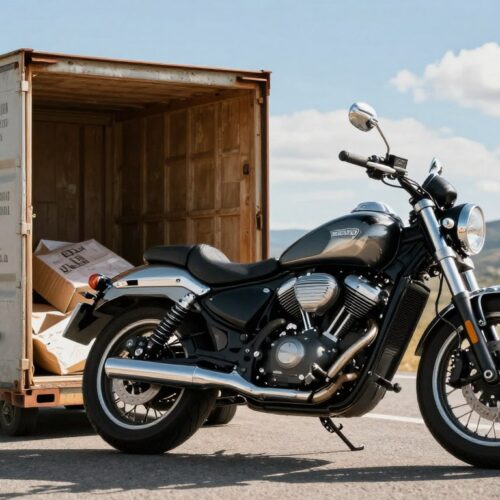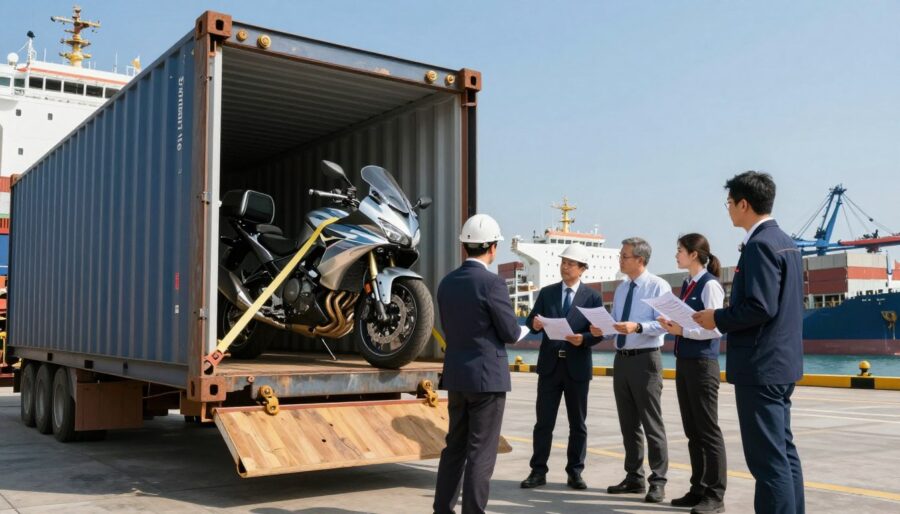
Moving your bike across borders can feel complex, but this guide breaks the trip down into clear steps. You’ll see the end-to-end process: choosing a transport method, preparing the vehicle, arranging pickup or port drop-off, and clearing customs at the destination. Schumacher Cargo Logistics moves over 5,000 bikes yearly to 80+ countries and offers nationwide pickup and tracking, which helps simplify each step.
This guide is for riders relocating, long-term travelers, military and expats, and buyers who want their ride abroad without extra delays. You’ll get a preview of the three main transport paths—container, Ro-Ro, and air freight—and how each affects cost, speed, and damage risk.
Expect pricing to include more than ocean or air: domestic transport to port, export handling, and destination fees vary by country and port. Remember that documentation drives timelines; incomplete papers can hold your cargo even if the transit is fast. Proper securing and professional handling cut damage risk and save headaches.
Key takeaways: This intro lays out the full process, who should read on, the main transport options, hidden cost components, and why paperwork and prep matter.
Decide if Overseas Motorcycle Shipping Fits Your Timeline, Budget, and Destination
Not every route fits every plan—your timeline, budget, and destination will steer the decision.
High-volume lanes include Europe, the Pacific, the Middle East, and Southeast Asia. Each destination changes routing, port schedules, local import rules, and final charges. That means sending your bike to the UK can differ from sending it to Germany or Australia.
Plan the trip in three cost legs: getting the bike to the port, the international transport leg, and destination port/terminal fees. Splitting costs helps you budget realistically and avoid surprise charges.
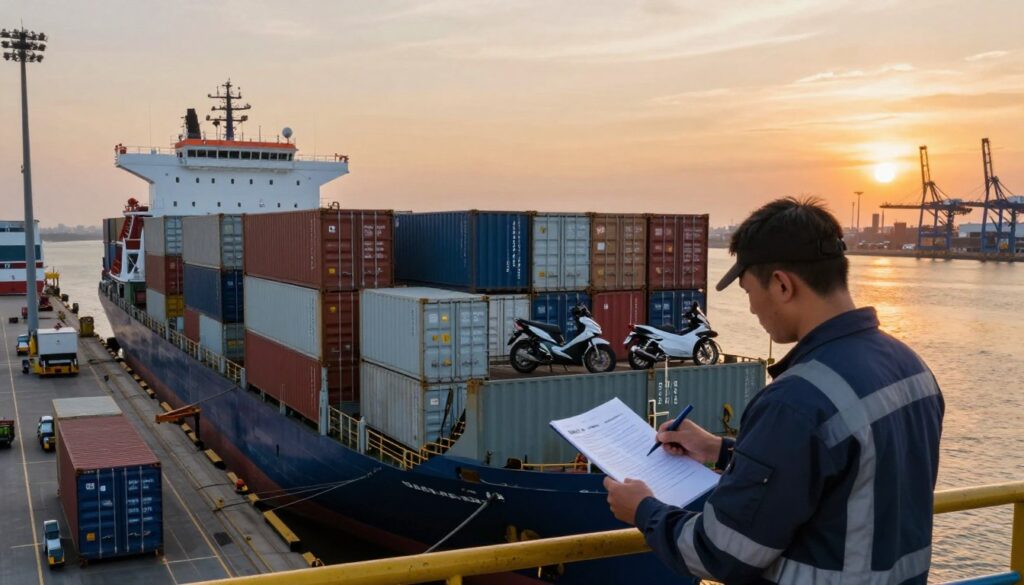
Port-to-port vs. pickup services
Port-to-port lowers fees but requires you to drop off and pick up at terminals. Pickup services offer door-to-terminal or door-to-port convenience for an added cost.
- If you’re far from a port, can’t ride the bike to the terminal, or want fewer handoffs, choose pickup.
- For flexible schedules, ocean options save money; for urgent moves, air cuts time but raises cost.
- Ask companies for lane-specific data: nearest port, sailing frequency, and processing time at both ends.
Quick checklist
- Where will the bike be received at origin and destination?
- How will you track it and who handles import paperwork?
- Confirm service windows, pick-up windows, and any extra terminal fees.
Shipping a Motorcycle Overseas: Choose the Right Transport Method
Choosing the right transport method shapes cost, timing, and how well your ride arrives. Below are practical options and when each fits your plan.
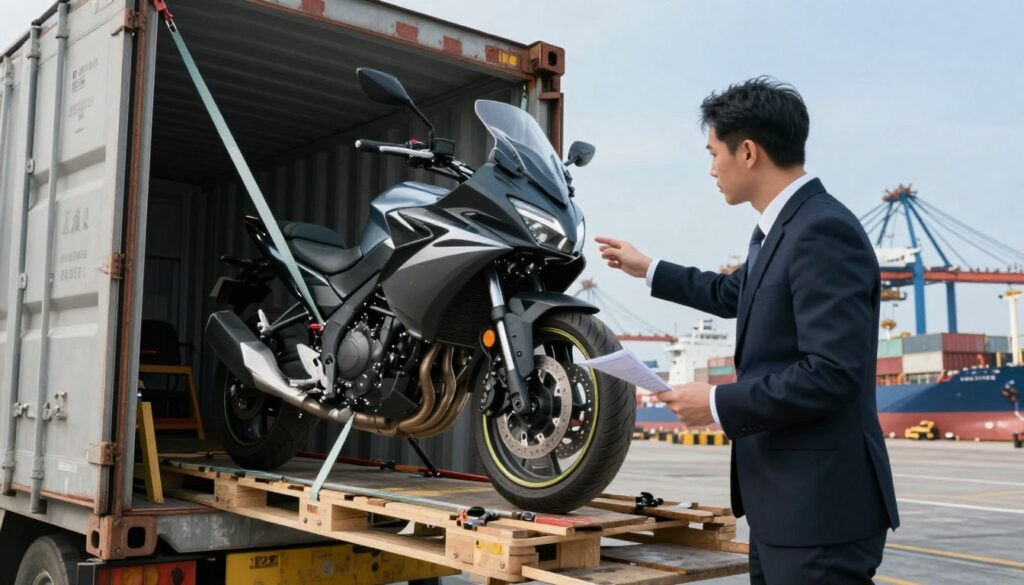
Container option: balance of cost and protection
Container service is the go‑to when you want good protection and steady pricing. Your bike is immobilized with certified wood and often block-and-brace inside the container.
Choose this when you want less exposure to weather and salt, and when you value control over loading and securing.
Ro‑Ro: roll-on convenience and tradeoffs
Roll-on/roll-off means the vehicle is driven onto the vessel. The bike must be operable and free of loose attachments.
This way can cut costs on some lanes, but it leaves the bike more exposed. Consider Ro‑Ro only if you accept higher risk or if the lane makes container service costly or unavailable.
Air freight: fastest, pricier, volume-based
Air freight moves your bike fastest. Pricing is based on cubic volume, so tall or wide bikes can cost more.
Use air when time matters and budget allows. High-value or urgent moves often justify the extra expense.
Crating vs. block-and-brace: protection levels
- Block-and-brace: immobilizes the bike inside a container using certified wood. Good for most standard bikes.
- Crating: encloses the bike in a stamped wood crate. Best for custom or very valuable machines and for strict import rules.
- Pick based on bike type, urgency, and destination handling capabilities.
How Much It Costs to Ship a Motorcycle Internationally From the USA
Start with baseline rates so you can compare quotes on an apples-to-apples basis. Expect ocean moves to commonly run about $1,000–$2,000, while air often begins near $2,000–$3,000 or more. Some lanes can start from roughly $750 for simple port-to-port service.
Typical price ranges for international moves
Ocean rates give lower price per cubic foot. Air prices rise quickly because carriers price by cubic volume and capacity. That means packed size can matter more than weight.
Why air costs more and how cubic volume affects price
Air freight uses volume formulas. A crate or wide handlebars increase billable space. Ask for volumetric estimates on any quote.
Key cost factors
- Location: distance to the port or pickup adds domestic transport fees.
- Dimensions & weight: length and width affect rate, especially for air.
- Method & destination: container, Ro‑Ro, or air change price and final destination charges.
- Time & service level: door pickup costs more than terminal drop‑off.
Add-ons and hidden fees to ask about
Before you book, request a full quote that lists export handling, documentation, crating, terminal fees, storage, liftgate, re‑delivery attempts, and optional insurance. Comparing like-for-like service prevents surprise fees at delivery.
Documents and Customs Requirements You’ll Need for International Shipping
Clear, correct paperwork starts the process and keeps your bike moving through customs without surprise holds. Gather core items early so the export timeline stays predictable.
Core paperwork you should have ready
Prepare your motorcycle title and current registration, and make sure names and VIN match exactly across all records.
Confirm destination import requirements — some countries need proof of ownership length, a local description, or specific permits.
Air freight and the SLI form
Air moves demand stricter documents and tighter timelines. The SLI (Shipper’s Letter of Instruction) tells the carrier how to export the unit.
Filing the SLI accurately prevents export processing delays and supports customs declarations.
How to avoid customs delays
- Send clear copies and legible scans of title and registration.
- Match names, addresses, VIN, model, and weight consistently in every form.
- Respond quickly if customs requests extra information or corrected data.
Ask your company what they will file and what you must supply before pickup. Customs timelines vary by country and port, so complete, consistent information is the smartest way to control the schedule for your shipment.
Prepare Your Motorcycle to Prevent Damage During Overseas Transport
Before your bike leaves the origin, do a quick inspection and capture clear records. This step protects you if damage is found later.
Pre-shipment inspection and photo documentation
Walk around the bike and note scratches, dents, and loose parts. Keep a dated description and copies of any dock receipt or inspection report you receive.
Take high-quality photos from all angles and close-ups of existing marks. Email or store them with your shipping paperwork as your condition record.
Securing the bike to reduce movement
Proper immobilization matters: movement at sea is a common cause of damage. For container loads, ask for block-and-brace restraint. Ro-Ro moves need tight tie-downs and no loose parts.
Battery, fluids, and loose attachments
Follow your shipper’s rules for battery disconnection and fluid limits to prevent leaks and meet carrier rules. Remove or secure mirrors, saddlebags, windshields, and other attachments.
- Document condition with photos and written notes.
- Use professional block-and-brace or certified crating for extra protection.
- Confirm final width, height, and weight after prep to avoid pricing changes.
- Keep all inspection reports and shipment information with you.
Pick a Reliable International Motorcycle Shipping Company and Compare Quotes
Before you book, verify credentials and compare matched quotes so your ride arrives intact.
What “licensed and bonded” means and how to vet experience
Licensed and bonded means the company meets basic regulatory and financial standards. That still leaves room for variance in actual skill with motorcycle transport.
Check years in business, volume moved, lane coverage, and how claims are handled. Ask whether loading and securing are done in-house or by subcontractors.
How to compare quotes by matching service levels and insurance
Match pickup vs port drop-off, container vs Ro‑Ro vs air, and whether crating and export paperwork are included. Request written breakdowns of rates and included services.
Review insurance details: limits, deductibles, exclusions, and the claim process before you accept any quote.
Red flags to avoid
- Unrealistically low price or pressure to book immediately.
- Vague answers about destination fees, storage, or how they secure your bike.
- Missing written details on insurance, pickup windows, or final delivery charges.
Conclusion
Wrap up by checking cost drivers, paperwork, and protection so your move stays predictable. Confirm your timeline, pick the method that fits your risk tolerance, and get detailed quotes that list every cost and domestic leg.
Remember the main factors that drive cost: chosen method, volume and dimensions, transport to port, and destination fees. Compare quotes line‑by‑line so hidden fees don’t surprise you.
Don’t treat customs and import requirements as an afterthought. Complete, consistent paperwork speeds clearance and avoids holds. Secure your bike with block‑and‑brace or crating and remove loose parts to cut damage risk.
Compare companies by service level and fee transparency so you can confidently ship motorcycle overseas. Use this checklist to make international motorcycle shipping predictable and stress‑free.