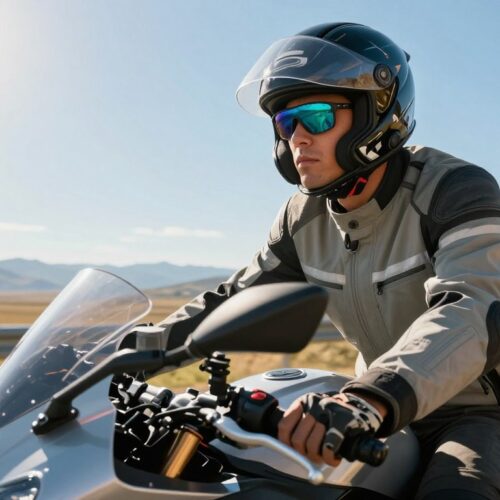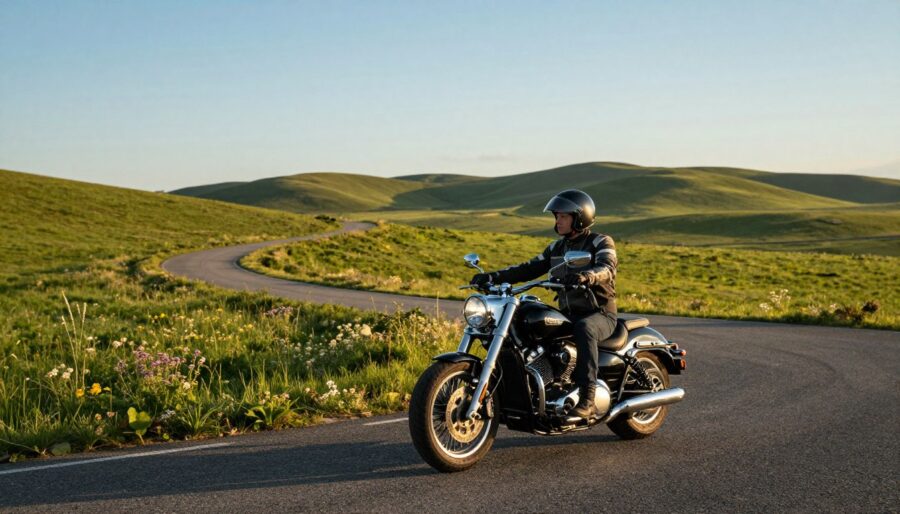
You’ll get a clear, evidence-informed look at how long trips on a motorcycle can support your mind and overall well‑being. This introduction sets expectations: this is an informational guide, not medical advice, and it draws on research such as the 2021 UCLA study that linked riding to lower stress and improved focus.
We’ll define the phrase mental health benefits of motorcycling and preview themes: how the open road offers a mental reset, what science measured in the body, and why community and connection matter. You’ll read about the blend of focus, movement, and sensory input that riders report as meditative and clarifying.
This piece frames riding as a complement to healthy routines and therapy — not a replacement. You’ll see both solo and social angles, plus a brief look at the mind‑body connection that helps explain why riding can feel different from passive hobbies.
Why Long-Distance Riding Can Feel Like a Mental Reset on the Open Road
Long rides often act like a reset button, clearing the clutter in your head as miles stretch ahead. When you step away from constant pings and multitasking, the open road gives a simple, sustained task that pulls attention outward.
How full-sensory riding pulls you into the present moment
Full-sensory riding means noticing wind on your face, temperature shifts, the texture of the road, and the engine’s pulse. These real-time inputs demand your attention and keep you tied to the moment rather than replaying worries.
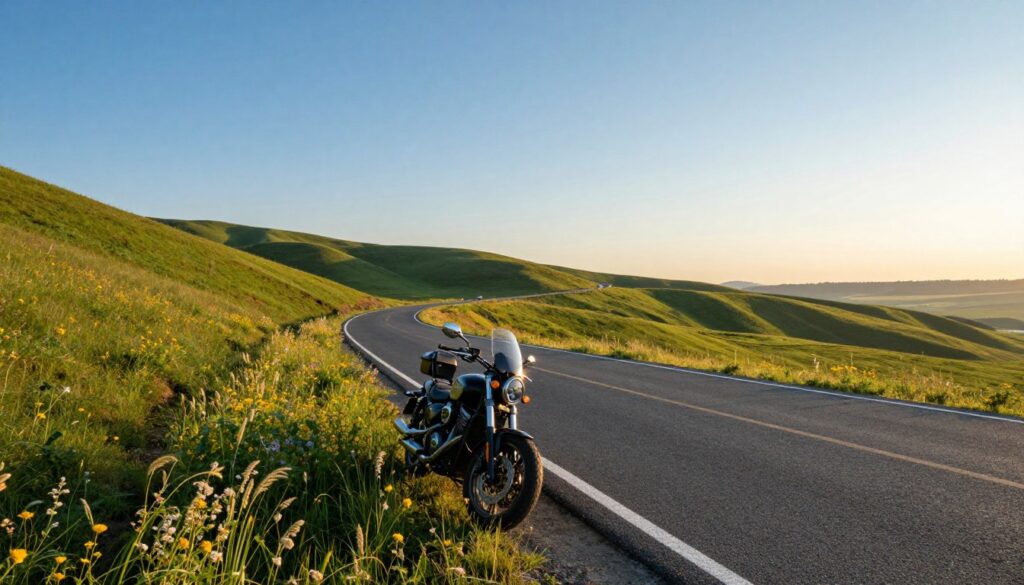
The “flow state” effect: when focus replaces anxiety and mental noise
As you manage lines, braking points, and traffic, your focus narrows in a useful way. This focused state reduces mental noise and can loosen anxiety while you’re engaged.
You aren’t zoning out — you’re concentrating on clear, task‑relevant cues that need split‑second judgement.
Freedom and empowerment: why making every decision on the bike builds resilience
Choosing your route, setting pace, and deciding when to stop gives a practical sense of agency. That freedom can rebuild self‑trust, so you return to daily life calmer and more capable.
- Reset effects: quiets stress and clears headspace
- Present focus: sensory cues anchor attention to the road
- Agency: planning and choices strengthen resilience
This way of managing stress is not avoidance — it creates space so you can come back with clearer focus. Next, you’ll see what researchers measured in the body and brain to explain these shifts.
The Science-Backed Mental Health Benefits of Motorcycling
Scientific measurements reveal how a quick ride can alter stress hormones and sharpen attention. In a 2021 UCLA study (Harley‑Davidson funded), a 20‑minute ride produced a 28% drop in cortisol, a common stress biomarker. That drop suggests even short rides can help reduce stress responses.
The same study tracked cardiovascular and chemical changes. Heart rate rose about 11% and adrenaline rose roughly 27%. Those shifts resemble light exercise: you feel energized but clearer. This combination supports better mood and improved mental clarity during and after a ride.

EEG data also showed increased sensory focus and alertness while participants rode. In practice, that maps to real tasks like scanning, hazard detection, and steady concentration on the road. These brain signals help explain why you can stay present and attentive while riding.
Researchers compare riding to active mindfulness. Unlike sitting meditation or yoga, motorcycling anchors your attention through coordinated movement and environmental awareness. Context matters: route difficulty, traffic, weather, and fatigue will shape the effect, which is why safety and pacing are key to getting a positive outcome.
- Data points: cortisol, heart rate, adrenaline, EEG
- What it suggests: reduced stress and sharper focus after short rides
- Practical note: plan for safety so the ride supports your mind and body
Mind-Body Connection in Every Turn: Mindfulness, Focus, and Calm
Intentional control—shift, brake, lean—builds a loop that brings your body and mind into sync.
Why the mechanics matter: shifting gears, modulating brakes, and leaning into a corner form a sequence of actions that demand timing and feedback. Each input asks for coordination, so your attention stays guided by sensation and response.
That embodied awareness supports mindfulness because you track what your body does and what the bike communicates through vibration, traction feel, and balance. Over time, smooth inputs create a stronger sense of oneness between decision and movement.
- Controlled riding: choose routes that match your skill level.
- Rhythm and rest: take breaks, hydrate, and avoid riding when overly tired or emotionally flooded.
- Plan for conditions: heavy traffic or poor weather raise stress, so pick time and road to suit your goals.
When attention is organized around one task, you often feel more peace and clarity than when your mind is split across many worries. This state is not about speed; it is about steady, present riding that supports your mental well-being and focus.
Solo rides can be restorative, but many riders also find added support and connection through group rides and community. That social layer often deepens the calm and sense of purpose you get from time on the bike.
Community, Connection, and Support: The Social Side of Riding Motorcycle
Riding with others turns solo freedom into a shared rhythm that can ease isolation and build belonging. Small gestures — a wave or a stop‑side chat — remind you that you are part of a larger community. That simple contact matters for people who ride regularly.
Belonging on two wheels
Rider culture offers quick, low‑pressure ways to connect. Even a brief conversation at a rest stop can reduce isolation and strengthen connection.
Group rides and shared purpose
Group pacing, planned routes, and a common goal create structure. These rides give you accountability and companionship without forcing deep talk right away.
Support programs and advocacy
Motorcycle Missions pairs building and riding to restore purpose for veterans and first responders. Events like the Distinguished Gentleman’s Ride have raised over £35 million since 2012, creating space for open conversation.
- Survey note: Bikesure found 90% of riders reported a positive effect on mental well‑being (survey perception).
- Find local groups via dealerships, clubs, charity rides, and online forums — vet culture and safety norms first.
- Electric motorcycles (e.g., Maeving) offer a quieter ride so you can tune into surroundings and notice small cues for added peace.
Conclusion
To conclude, time on the road layers sensory focus, measured physiology, and social ties into a useful strategy you can try.
The key evidence is clear: a 20‑minute ride produced a 28% drop in cortisol in the UCLA study, while heart rate rose ~11% and adrenaline ~27%. EEG readings also showed increased sensory focus and alertness.
Put together, long rides can be one practical part of your broader wellness toolkit — they pair embodied attention, calming sensory input (quieter electric bikes can help), and community rides or advocacy events that reduce isolation.
Start safe: get training, use proper gear, and pick manageable routes so the experience supports calm rather than adding stress. Explore local groups if you want connection.
SEO checklist: “\n\n \n\n” “\n\n”