This short guide shows you how to restore firm lever feel by removing air and old fluid from your hydraulic brake system.
You’ll work slowly, keep parts clean, and watch for visible bubbles while you top up fresh fluid. Typical DIY time is about 30–60 minutes depending on experience and how much air is trapped.
In plain steps you’ll prep the bike, pick the right fluid, set up a catch method, bleed in the correct sequence, and finish with safety checks. Focus on lever feel and consistent pressure rather than speed.
Why this matters: a firm lever and predictable braking cut stopping distance and boost control in emergencies. Protect painted surfaces — fluid can harm finish — and use fresh fluid from a sealed container.
What this guide won’t do: it covers standard home bleeding only. Stop and get professional help if you see leaks, damaged lines, or you can’t restore firm pressure.
Why Bleeding Your Motorcycle Brakes Matters for Stopping Power and Safety
Good stopping power starts with a clean, air-free fluid path between the master cylinder and the caliper.
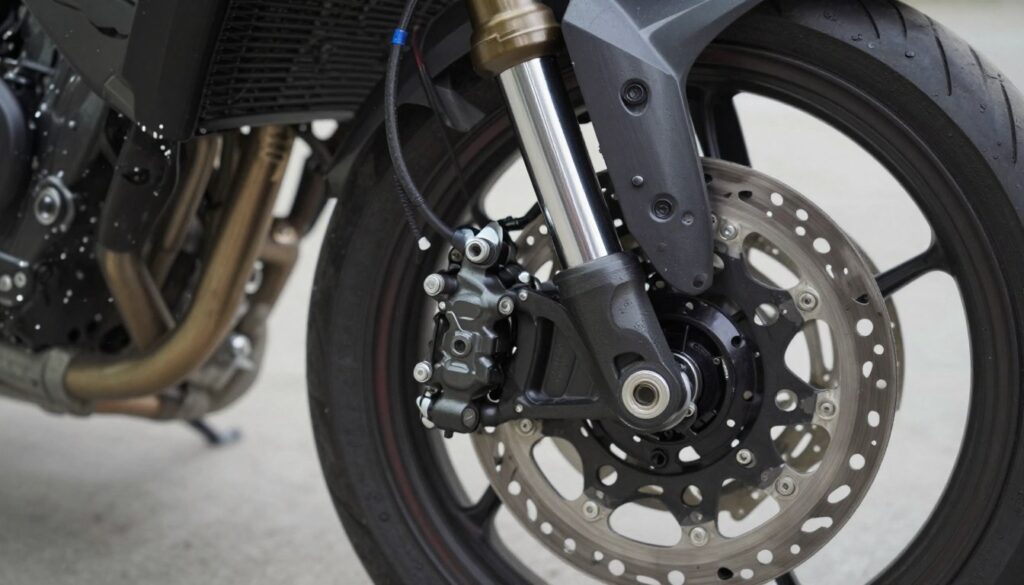
How the hydraulic system transfers your input into clamp force
Squeezing the lever forces brake fluid from the master cylinder through lines to the caliper. The fluid transmits your hand force into piston movement and pad clamp force on the rotor.
What removing air and old fluid achieves
Purging trapped air and old fluid lets the system transmit pressure instead of compressing air. Air in the lines causes extra lever travel, delayed bite, and reduced stopping power.
When to act: practical triggers and a simple schedule
- Soft or spongy brake lever feel or inconsistent braking — do not ride until fixed.
- Fluid that looks dark, cloudy, or contaminated; visible leaks at fittings.
- After any repair that opens the hydraulic circuit or every 1–2 years of time, sooner in harsh riding conditions.
Tools, Brake Fluid, and Setup Before You Touch the Bleeder Valve
Before you crack open the reservoir, gather the right tools and confirm the correct fluid spec from your owner’s manual. This prevents seal damage and ensures the system works as designed.
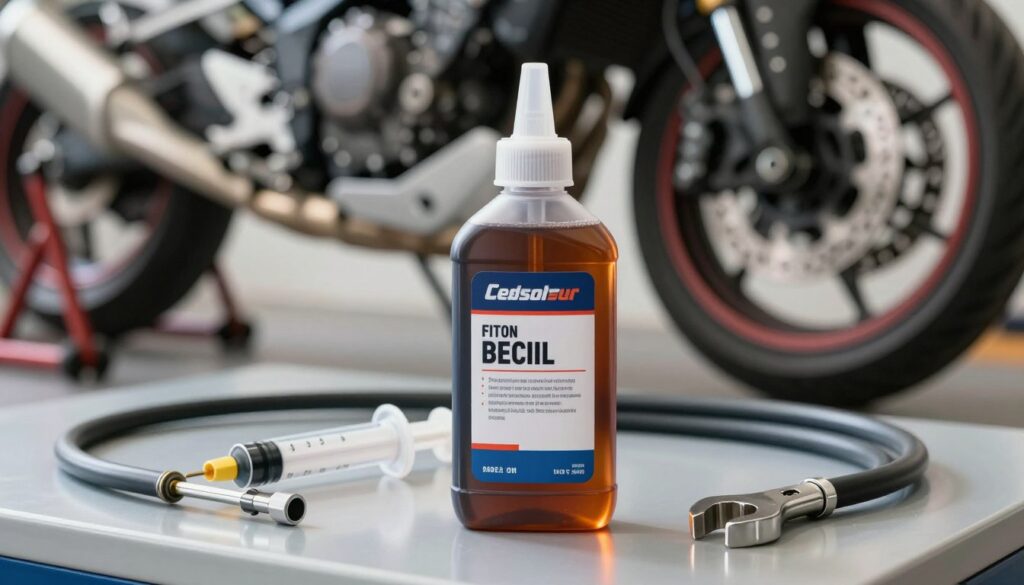
What you’ll need
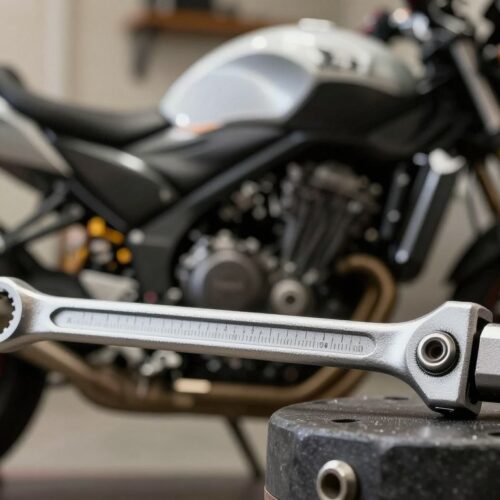
- Wrench or spanner sized for the bleeder valve and banjo bolts.
- Clear tubing that fits snugly over the nipple and a clean glass jar for the catch container.
- Plenty of rags, gloves, and a small funnel for adding fresh brake fluid to the reservoir.
- Optional: a one-way bleeding kit to simplify the job, though the hose-and-jar method works fine for beginners.
Protect paint and handle the reservoir
Cover nearby tank and fairings and wipe the master cylinder area before opening. Dirt in the fluid reservoir invites wear and poor performance.
Use a small amount of clean fluid in the jar and keep the tube end submerged so you don’t pull air back into the lines. Rest the reservoir cap on top (not fully tightened) to reduce splashes while keeping contaminants out.
Pre-loosening and compatibility
Carefully pre-loosen seized bleed nipples with the correct wrench. If corrosion is bad, replace mild steel nipples with stainless. When changing lines check banjo bolt pitch (some Suzuki models differ between M10x1.00 and M10x1.25).
Bleeding Motorcycle Brakes Step by Step
Position the bike and master cylinder so air can rise through the brake lines.
Position the machine and reservoir so air naturally rises out of the fluid path as you work. Level the master cylinder and avoid high loops in the lines where air can hang up.
Top off the reservoir
Fill the reservoir with fresh brake fluid and rest the cap on top to prevent splashes. Keep the level above the min mark at all times.
Prime an empty line
With the tube submerged in a jar, slowly squeeze and release the lever so the master cylinder pulls fluid into the line. Repeat until fluid reaches the caliper.
Bleed order and lever technique
- For twin-disc setups, start with the caliper farthest from the master cylinder.
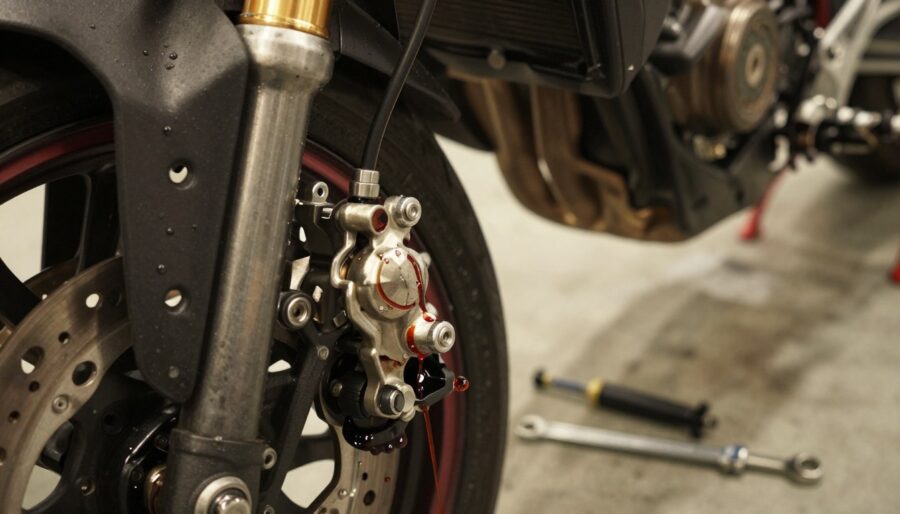
- Pump to build pressure, hold the lever, open the bleeder valve about half a turn, then close it before you release the lever.
- Repeat in a steady rhythm; don’t rush.
Watch for air bubbles and clear fluid color. Never let the reservoir run dry. When no bubbles appear and the fluid runs clear, snug the bleeder valve, wipe clean, reinstall the cap, and confirm a firm brake lever feel.
Troubleshooting Spongy Brakes and Stubborn Trapped Air
If the lever still feels soft after a session, follow a step-by-step checklist to find where air or leaks are hiding.
Re-bleed checkpoints
Start by checking every fitting for tightness and any wet spots that show leaks. Confirm the bleeder valve threads are snug; a loose nipple can suck air back into the line even with one-way tools.
Caliper and nipple position
If the bleed nipple isn’t the high point, remove the caliper and rotate it so the nipple tops out. Insert a pad spacer to stop pistons from popping when you press fluid through.
Master cylinder pockets and syringe option
Hose arches near the master cylinder can trap air. Reroute the line or use a syringe to push fluid upward while you watch the reservoir so it won’t overflow.
Zip-tie trick and when to stop
Tie the lever to the bar with the upper banjo fitting lower than the master, then release slowly after ~20 minutes. If lever feel still won’t build steady pressure, suspect a sealing or return-port blockage.
- Cleanliness matters: tiny dirt causes seal leaks and blocked ports.
- Don’t ride with inconsistent pressure; get a professional inspection if needed.
Final Checks Before You Ride: Leaks, Line Routing, and Torque Settings
Before you head out, inspect fasteners and routing to make sure the system is sealed and clear.
Walk the bike through a short visual sweep. Check banjo bolts, bleed nipples, brake lines, and the master cylinder reservoir for any wetness or fresh fluid traces.
Torque and why it matters
Correct torque seals connections and stops air from being pulled into the system when the lever releases. If bolts are loose you risk leaks; if they’re over-tightened you can damage threads or crush crush washers.
Actionable range: torque banjo bolts to 20–33 Nm (14–24 lbf⋅ft) unless your service manual says otherwise. Verify banjo bolt pitch when reinstalling; some Suzuki models differ.
Quick functional test and clearance checks
- Slow roll the bike a few feet, apply the brake progressively, and stop. Check fittings for any seepage.
- Squeeze the brake lever; it should firm quickly and hold steady pressure without creeping toward the bar.
- Turn the bars to full steering lock both ways. Confirm lines don’t kink, twist, rub, or stretch under full compression.
If you spot a leak, strange lever feel, or any line rubbing, do not ride. Re-torque, fix the routing, or re-bleed and retest until the system feels reliable.
Conclusion
Finish with a firm, predictable lever and clean fluid flowing through the entire system.
Proper bleeding motorcycle brakes removes trapped air and replaces old brake fluid so the circuit feels solid and responsive.
Keep the reservoir topped, tighten fittings, and never let the level fall while you work to avoid pulling air back into lines.
If the lever still feels spongy or you see leaks, stop and have a shop inspect seals or bleed brakes for you.
Plan fluid service every 1–2 years or sooner if it darkens. Use the hose-and-jar method, follow the right sequence, and run final checks before you ride.
When in doubt, get a qualified mechanic to re-check the system so you leave with firm feel, no leaks, and safe stopping.