“Surely, of all the wonders of the world, the horizon is the greatest.” — Freya Stark.
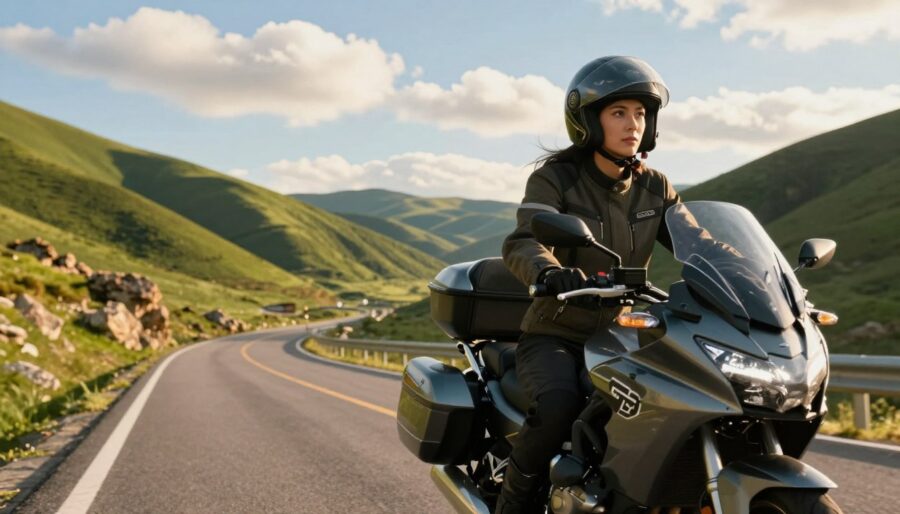
This guide shows what female solo motorcycle travel looks like in practice: independence, smart choices, and learning skills that keep you moving. You’ll learn mindset, planning, bike choice, gear, tools, safety, and route strategy.
Real riders prove it can start from not being ready. Marta Hari rode an 18-year-old Suzuki 250 from Italy to Mongolia in four weeks, and Lois Pryce covered 20,000 miles from Alaska to Ushuaia on a Yamaha XT225 after leaving her job.
Expect advice that fits limited money, time, paperwork, and weather. You’ll see how to accept help without losing control and how to set clear boundaries when needed.
Later, a US-focused safety section will show how global lessons map to local roads and remote regions. This section helps you begin now, from where you are, with practical steps for safe, empowering adventure.
Start With Your “Why”: Confidence, Independence, and the Horizon Mindset
Before you book a route, name the reason that will keep you going when plans shift. Your why is a decision tool. It helps when weather, budget, or other people pressure you to change course.
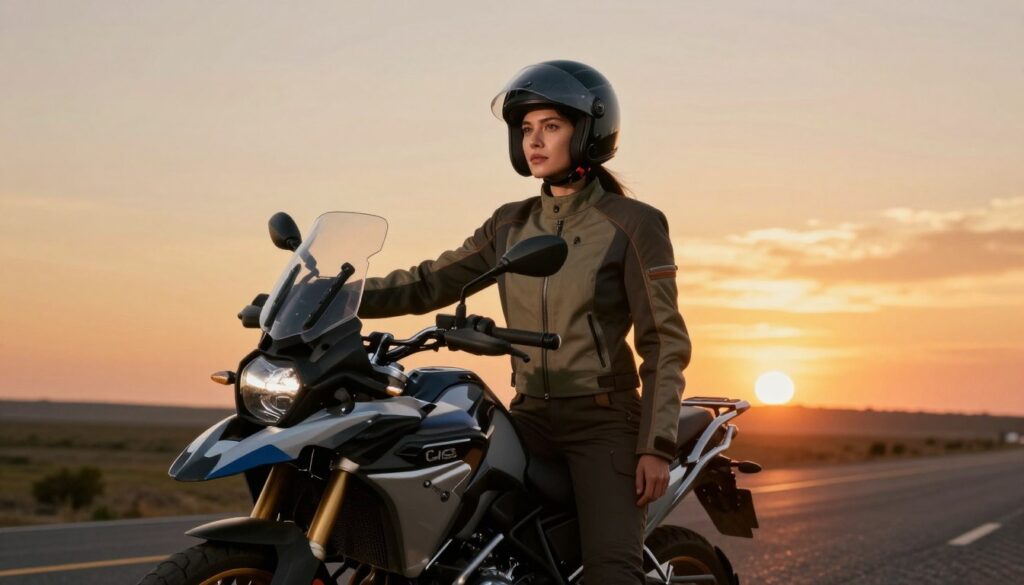
How you define adventure on your own terms
Define adventure for your comfort today: a weekend loop, a multi-state trip, or a longer route can all be meaningful. Use your why to choose what feels right now, not what other people expect.
Turning nerves into momentum when friends cancel or doubt you
Candida Louis’ story shows how canceled plans in Kerala became the push to travel solo. When friends bail, treat the moment as a clear choice: go anyway, shorten the route, or redesign the plan.
- Pick one next action — book the first night, service the bike, or map day one.
- Remember that other people’s doubt often reflects their fear, not your skill.
- Keep ownership of choices: accept help but stay in charge of the way forward.
Time is a mindset too. You may not have endless hours, but with a clear why you can make the most of the moments you have and build confidence as you go.
Female solo motorcycle travel: Planning your trip with real-world constraints
Good planning turns a big idea into a ride you’ll actually finish. Start by matching your destination to passport and visa realities, budget, seasonal climate windows, and how many miles you can comfortably ride per day.
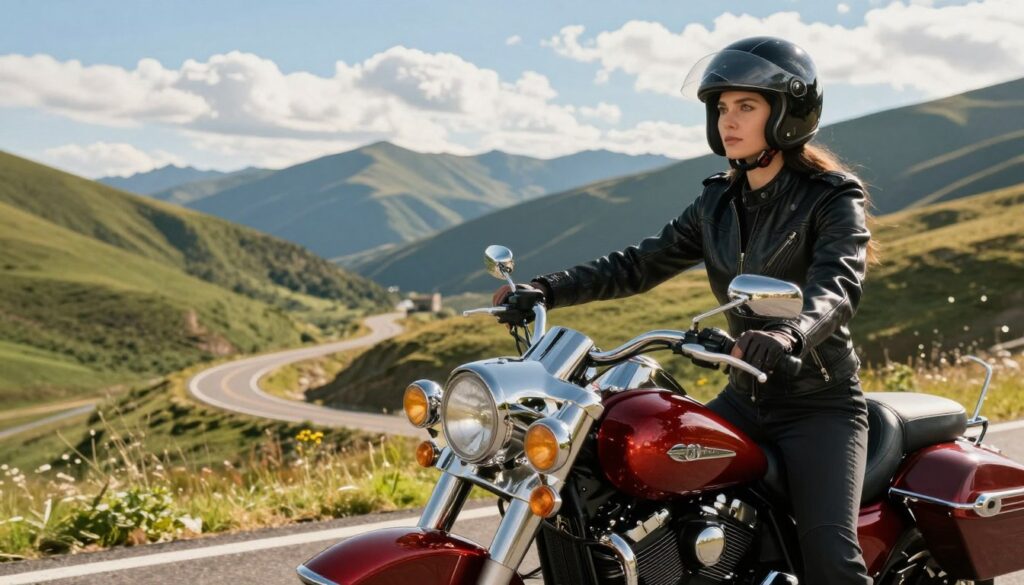
Choosing destinations and timeframes
Pick countries that fit your paperwork and riding stamina. Set state-to-state or country-to-country goals, but build in buffer days for weather, repairs, or rest.
Flexible itineraries that work
Plan blocks: riding days, maintenance days, and an open “no time schedule” span like Grace McDonald uses. Expect delays — Lois Pryce’s Yukon insurance problem shows how one missing paper can stop you fast.
Budget and admin you can’t ignore
- Fixed costs: insurance, registration, service — pay these first.
- Variable costs: food, fuel, lodging — cut or expand these as needed.
- Remember Candida Louis’ early years saved the trip; sponsorships rarely appear in the first months.
Connect planning to your job: short PTO, quitting, or freelancing change what “enough time” looks like. Break the trip into realistic chunks and keep control of the course.
Pick the Right Motorcycle and Setup for Your Body, Route, and Experience Level
Choosing the right machine and setup makes long trips feel easier and safer. Fit matters: seat height, weight, and ergonomics multiply your confidence at stops and on rough ground.
Small bike, big world
Light trail bikes like the Yamaha XT225 or XT250 prove why less can be more. They are easier to manage off-pavement, simpler to pick up after a tip-over, and forgiving in tight terrain. Lois Pryce and Chantal Simons used small machines for long-distance success.
Match the bike to the trip
Highway-heavy routes need stability and wind protection. Backroads, deserts, or mountains favor lightweight, rugged bikes that you can service yourself. Choose complexity based on your comfort with maintenance.
Companions, sidecars, and two-up realities
If your journey includes a companion or a dog, plan for different handling, braking distance, and tire wear. Mayo rode with Indigo in a sidecar; that setup changes luggage and accommodation choices.
- Prioritize: luggage weight distribution and low center of gravity.
- Protect: crash bars and skid plates where ground is rough.
- Access: leave room for quick checks on chain, oil, and tires.
Your goal isn’t a perfect bike. It’s a reliable, controllable setup that keeps you riding day after day with less fatigue.
Gear That Makes You Safer and More Self-Reliant
The right protective kit gives you extra time and options when things go wrong on the road. Gear is not a fashion choice here — it is an operational tool that helps you solve problems and avoid long nights waiting for help. Think margin, not invincibility.
Protection first: why a body protector can be your most important tool
Natalia Munoz called her body protector the most important kit she owned. It absorbed impacts, stayed cool in heat, and stretched to layer under jackets in Mongolia.
When you ride alone, reducing injury risk keeps a small mistake from becoming a stranded-night emergency. A solid protector is a thing that directly changes outcomes.
Layering for temperature swings and long days
Use a mesh base for hot afternoons and removable insulated layers for high passes or sunset. Carry just one warm mid-layer rather than five bulky pieces.
Ventilation, moisture-wicking fabrics, and simple fastening points let you adapt fast in changing places and tiring moments.
Visibility, intimidation, and fit that actually protects
High-visibility accents and sturdy-looking armor change how people read you. In many situations, looking prepared reduces hassle and signals capability to others.
Buy women-specific armor or adjustable plates so protection stays over shoulders, spine, and ribs. Comfort supports better judgment on long days.
- Why it matters: protection keeps you riding and reduces rescue needs.
- Choose fit: test armor placement and movement before long trips.
- Pack smart: prioritize protection, weather layers, and visibility.
Tools and Roadside Repair Essentials You’ll Actually Use
A small, well-chosen tool kit keeps minor breakdowns from becoming trip-ending problems.
The heavy tool worth its weight: a 30cm ring spanner for rear axle work. Chantal Simons kept one after 70,000+ km because you loosen that nut hundreds of times for chain tension and tire swaps.
The compact multi-tool that earns its space
A Leatherman-style tool covers fasteners, camp chores, and quick fixes. Wamuyu Kariuki used hers for technical work and simple kitchen tasks alike.
Tiny habit, big payoff
Check tire PSI every ride day. Dani Bradford changed one battery in years by making this a ritual. Catch slow leaks before they become dangerous.
Magnet, tape, soap, and improvisation
Grace McDonald relied on a telescoping magnet to recover dropped bolts. Race tape plus bathroom soap can seal smashed plastics long enough to limp to the next town for proper help.
- Minimal kit to carry: ring spanner, multi-tool, digital gauge, magnet, race tape, nipper or small screwdriver.
- When you carry almost nothing: learn to find mechanics, ask for help safely, and be resourceful without risking your safety.
Safety Strategies for Women Riding Alone in the United States
Safety on long roads in the United States begins with simple, repeatable choices you make every day.
Day-to-day risk reduction: fuel, food, and timing your miles
Plan fuel stops so you never run below a half-tank in remote stretches. Note service towns and add buffer miles for detours.
Keep fed and hydrated: eat small, regular snacks and drink water before you feel thirsty. A tired body narrows options fast.
Time your miles: set an early stop trigger—if you hit X hours or feel drained, stop. Shorter, steady days beat late, rushed arrivals.
Night riding decisions: avoiding long, dark stretches when you’re exhausted
Nights change risk. Candida Louis described being forced through long, dark forest stretches when she was exhausted; she learned to stop earlier to avoid that trap.
Choose daylight riding where possible and book a room before sunset if you sense fatigue. Bravery won’t replace visibility or rest.
Situational awareness at stops: gas stations, motels, and remote pull-offs
- Park facing the exit and leave space to turn out quickly.
- Scan people, cars, and exits before you remove your helmet.
- At motels, pick active lots and a lit room near entry points.
- On pull-offs, prefer visible areas and avoid secluded spots after dusk.
How you handle “hassle” and unwanted attention without escalating
Use short phrases, firm boundaries, and movement. If someone persists, thank them and leave—your exit is the priority.
Don’t assume weapons or tools. Your best leverage is timing, distance, and decisiveness. Most others will be helpful, and you’ll find kindness outweighs unpleasant moments more often than not.
Route Planning for Comfort and Control on Long Motorcycle Trips
Plan routes that protect your energy and keep decisions simple on long rides.
Building a daily riding rhythm
Start times and breaks matter: set a consistent morning leave time and schedule short breaks every 90–120 minutes to eat, hydrate, and check the bike.
Set a realistic daily distance goal that fits your skill and your bike load. Wamuyu Kariuki rode 3,100 kms in 10 days; that shows what’s possible, not what everyone should match.
Choose a sensible “stop riding” hour. Ending while you’re fresh prevents poor decisions late in the day.
Picking roads that match your skill level
Maps can hide effort. A direct road may add wind, heat, or steep climbs that sap energy when you’re loaded.
Match surface to skill: paved highways for steady miles, gravel for slow technical sections, desert for heat planning, and mountain switchbacks for careful throttle work.
Plan recovery as part of the route
Recovery time is not a luxury: schedule laundry, simple maintenance, and a full rest day every few ride days to reset mentally and physically.
- Start times, planned breaks, and food cadence build safety.
- Set distance goals that respect your energy and experience.
- Reroute without guilt if conditions make the road unsafe or no longer enjoyable.
People, Borders, and Breakdowns: How You Get Help Without Losing Independence
People you meet often shape the outcome when things go wrong. Kindness will often outweigh a few awkward moments, but you get to choose what help you accept and when.
Why kindness usually wins — and the safe filter for accepting aid
Normalize asking. Independence doesn’t mean doing everything alone; it means deciding which assistance keeps you moving and safe.
Use simple rules: accept help in daylight, stay in public view, set clear boundaries, and verify who you’re dealing with before handing over documents or keys.
Finding the right help fast: mechanics, workshops, and locals
Talk to people. Marta Hari relied on conversation to find competent mechanics. In one case, a workshop reproduced a custom Honda clutch tool from a drawing so Mayo could keep riding.
If your bike slows, ask a local garage to show nearby names, and you’ll find the right shop quicker than random searching.
Checkpoints, borders, and paperwork that shape your route
At police checkpoints, stay calm, be clear, and show respect. Mayo waved through a checkpoint while friendlier help pushed a broken bike to safety — behavior matters in tense situations.
Plan for bureaucracy: visas, country rules, and admin burdens will affect timeline and budget. In some cases a visa rule will make a country inaccessible, so carry alternate routes rather than forcing a risky workaround.
- You’ll normalize getting help as part of smart riding.
- Keep daylight, visibility, and boundaries as your safety filter.
- When needed, accept practical help but stay in charge of decisions.
Sometimes others join parts of your route — a husband or a friend for a leg — and that changes logistics without removing your autonomy. Use their support when it helps you reach your goal.
Inspiration From Solo Women Motorcyclists Who’ve Done It Before You
Real riders often begin with a single, imperfect decision and see how far it takes them. These examples show that training, planning, and grit beat waiting for perfect readiness.
From new license to international distance: committing before you feel ready
Marta Hari got her license, then four months later rode an 18-year-old Suzuki from Italy to Mongolia. Her timeline proves action multiplies learning.
Key takeaway: combine basic training with a clear plan and start small if you must.
Turning a job change into a journey
Lois Pryce quit her BBC job, bought a Yamaha XT225, and rode from Alaska to Ushuaia. Her changes show how a job shift can unlock a long journey and new identity.
Candida Louis left an MNC later, built a brand, and rode Bangalore to Sydney. Early years were tight on money, but persistence created opportunity.
Memorable moments, scary situations, and what you learn
Expect bureaucratic headaches, impound scares, or tense checkpoints. These are learning moments that sharpen judgment and planning.
- Use real examples to see that progress is gradual, not instant.
- Accept that money and comfort may lag at first; experience grows credibility.
- Turn lessons into habits: training, a short overnighter, and a written route plan this week.
Your core takeaway: adventures are built from many careful choices, not one fearless leap. Start with one trained skill, one booked night, and one clear safety check.
Conclusion
Finish by turning inspiration into action: pick a start date, set one realistic route, and commit to daily habits that save you time and worry.
Recap the system: name your why, plan for constraints, choose a motorcycle that fits, wear gear that reduces injury risk, carry a small toolset, and pace your days so judgment stays clear. These parts add up to consistent progress.
Your decisions — timing, stops, and firm boundaries — matter more than any single gadget. Asking for help is part of smart riding; most people you meet will treat you with respect when you stay clear and confident.
Leave home without cutting the ties that support you. If friends change plans, redesign and go anyway. Ride toward the horizon one day at a time and take the way you can start now: pick a date, plan one short route, and finish a departure checklist this week.