This guide helps you plan a safer, smoother trip through long stretches with few services. Define “remote” for your route: long gaps between towns, limited hours, and stations that may run out of supply.
Think of fuel management as planning first and carrying extra second. A 5‑liter jerry can often adds wasted weight. Good route prep with pre‑plotted stations cuts the need to haul cans.
Your on‑paper economy will change when you add luggage, headwinds, elevation, and slower riding. Plan using a worst‑case range so you leave margin for delays.
Two pillars you’ll use through this article: know your real usable range, and design a route with backup options. Learn to test range, spot risk early, and decide when extra gas is worth it.
You’ll also get safety‑first tips for carrying portable containers and securing them properly so you don’t create a hazard while you enjoy the adventure.
Know Your Real-World Fuel Range Before You Go Remote
Confirm your bike’s true usable range before you rely on it. Simulate worst-case conditions so you plan with numbers, not guesses. Fill the tank, then ride slow off-road loops or rush-hour stop-and-go to raise consumption.
Record three clear markers during the test:
- When the dash or lamp first warns you.
- The reserve or petcock point you would normally use.
- The moment the engine stops and any extra distance you can coax.
Use those results to compare advertised range and the dash estimate with what you can actually ride. Experienced riders aim for a 250–300 miles usable buffer to cover closures, holidays, or shortages.
Remember the usual range killers: elevation, headwinds, heavy luggage, aggressive pace, and low gearing. Adjust your planning and tank choices to match how you ride and carry gear.
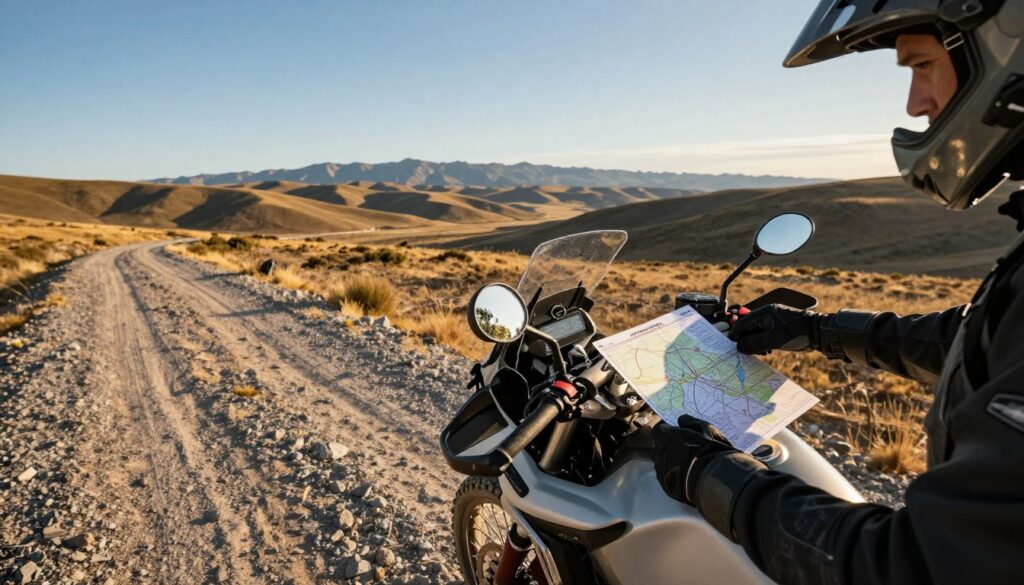
Route Planning That Prevents Running Out of Gas
A good route stops surprises before they happen. Use maps and station locators to plot service points in advance. That simple step keeps your day and your trip steady when the road gets sparse.
Start by loading confirmed fuel stops into your GPS or phone. Pick two realistic stops for each leg: the primary and an alternate that sits earlier or later along the route.
Use online maps and station locators
Search apps and locator sites for open stations and hours. Pin several choices, then export or add them to your route so navigation follows service reality, not the fastest line.
Plan your day around towns, not just miles
Structure each day by towns and services. When the road between towns is long, treat that distance as the real challenge rather than the raw mileage on your GPS.
Create a “Plan B station” near your limit
Simple decision rule: if the next stop sits near your tested range, mark an alternate immediately. Reset trip meters or note mile markers to confirm you’re tracking consumption as planned.
- Pre-load stops: add primary and backup stations into navigation.
- Scan schedules: watch holiday hours and seasonal closures.
- Watch red flags: long gaps, seasonal roads, and limited hours.
Good planning lowers how often you carry extra cans and cuts anxiety. Spend 15–30 minutes plotting each day and you’ll ride with far more confidence.
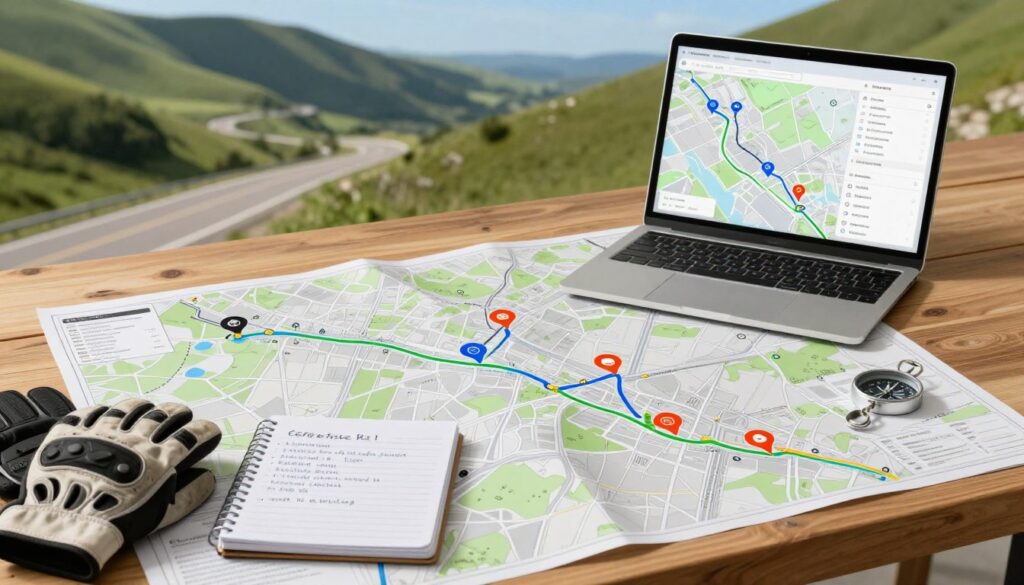
Finding Fuel on Remote Motorcycle Trips When Stations Are Few or Unreliable
When stations are scarce, treat every pump as uncertain until you confirm it has stock.
Approach a pump with healthy skepticism. Look for posted signs like “NO GAS,” check hours, and ask locals if someone is available to confirm supply. A station on a map is not the same as gas available right now.
Adopt the half-tank rule. In desolate places keep at least half a tank even if that means extra stops. That habit beats squeezing every mile from the gauge and reduces the chance of a roadside emergency.
Mind the time of day. Small places often close early or sell out late in the day. If you arrive near closing, prioritize filling and move on rather than waiting for a refill cycle.
- Scan signs and islands before stopping.
- Ask an attendant or nearby resident when deliveries arrive.
- Record alternates so you don’t improvise under stress.
If a planned stop is closed: slow your pace, steady the throttle, and reduce load where safe. Reassess headwind and elevation, then extend to the next option in your Plan B. Stay calm — prepared choices beat last-minute guesses.
When to Carry Extra Fuel vs. When Planning Is Enough
Let measured range and confirmed stop gaps guide whether extra cans are worth the weight. Start by comparing your tested realistic range to the longest confirmed gap on the road, then add a conservative buffer for uncertainty.
Decision framework:
- If services are dense and hours predictable, smart planning beats hauling cans.
- If the gap is near or beyond your tested range, add a small safety bottle to reach the next town.
- For major stretches or in areas with strikes, shortages, or holiday closures, carry enough to cover the gap plus a detour.
Match capacity to the situation. A small tank-mounted bottle reduces risk with minimal handling impact. Large rigid cans help in lengthy solitude but cost handling and balance on your bike.
Keep weight and handling tradeoffs in mind. The goal is reliability: reduce the odds that one bad surprise turns your trip into an emergency.
Best Ways to Carry Extra Fuel on a Motorcycle (and Do It Safely)
Match the storage method to how you travel and how often you need extra range. Pick a solution that fits your bike and your style before you load any containers.
Extended‑range tanks are a long‑term choice for frequent remote riding. Brands like IMS, Acerbis, and Clarke offer reliable aftermarket tanks that increase capacity without loose cans.
Flexible bladders (Desert Fox: 3/6/20 L; Giant Loop: 1–5 gal) roll flat when empty and mount with D‑rings or straps. They save space and add useful liters when needed.
Small bottles from MSR (325/591/887 ml) and Primus (350/600/1 L/1.5 L) give a compact backup and double as stove canisters for camp.
- RotopaX — stackable 1–4 gal cans that are rugged but pricier; vent them daily when elevation or temperature changes cause pressure shifts.
- Auxiliary tanks — Camel tanks and similar fit specific models (example: some BMWs) and act like a second tank you switch to when needed.
- Traditional jerry cans — inexpensive and common, but bulky and more vulnerable in a crash; mounting position matters.
Safety first: only use containers rated for gas. Make sure they are sealed, mounted away from heat, and checked for leaks each time you stop. Treat any spill as a stop‑now issue.
Conclusion
A clear plan for stops and a tested range turns uncertainty into confidence.
Use a short checklist before you roll: test worst-case range, plot reliable stops, set a Plan B, and adopt conservative habits in thinly served areas.
Don’t wait for the warning light in desolate stretches. Stop earlier if the next town is far, and aim to arrive with margin rather than risk a late‑day scramble.
Carry extra only when the route demands it. Pick the safest container that fits your bike and mounting options, and secure it away from heat.
Do this and you’ll ride with clarity. Your plan will cover closures, shortages, and the small surprises that turn a good trip into a safe one.