
You log long highway miles and rely on gear that keeps you safe and comfortable. A Cambridge study shows helmet interior levels can top 100 dB, which raises real concern for long trips and for motorcycling riders.
This short buyer’s piece explains practical choices: what to buy, how to choose, and how to wear earplugs correctly under a helmet. Think of it as a concise motorcycle ear protection guide focused on real-world use and comfort.
Prolonged noise can cause hearing loss and tinnitus faster than you expect. You’ll learn wind-noise basics, typical decibel ranges, and why good hearing protection helps you stay alert and less fatigued while riding.
The recommendations prioritize long-wear comfort, helmet fit, realistic noise reduction, and value. By the end, you’ll know which earplugs fit your kit and how the right choice will help protect hearing and support safer, more focused rides.
Wind Noise Is the Real Problem, Not Just Your Engine
What makes highway riding brutal for hearing isn’t the engine—it’s the air howling past your head. At speed, turbulent airflow around the shell, visor seals, chin bar, and neck roll creates a high-frequency roar that often feels louder than the powerplant.
Turbulence forms where smooth flow breaks. Small gaps and vents turn clean wind into a shredding, steady sound. Even a quiet bike becomes a high-noise environment once airflow stacks up at sustained speed.

Why constant exposure matters
On long tours you rarely get quiet breaks. That steady wind noise equals continuous sound exposure, not short bursts. Trucks, riding position, windscreen height, and open vents can all spike perceived levels in seconds.
- Shell shape and visor seals drive high-frequency roar.
- Stacked airflow at highway speed amplifies what feels like constant noise.
- Small setup changes can suddenly raise or lower the wind level.
Wind-driven noise targets the high frequencies that damage hearing fastest. Earplugs are designed to reduce that component. Next, we’ll quantify risk by decibels and time-at-level so you can see how long is too long.
How Loud Is Riding, Really? Decibels, Noise Levels, and Your Risk
At highway pace the noise inside a helmet can climb fast — and time is the real threat. Measured in decibels, that interior level often matters more than the peak number.
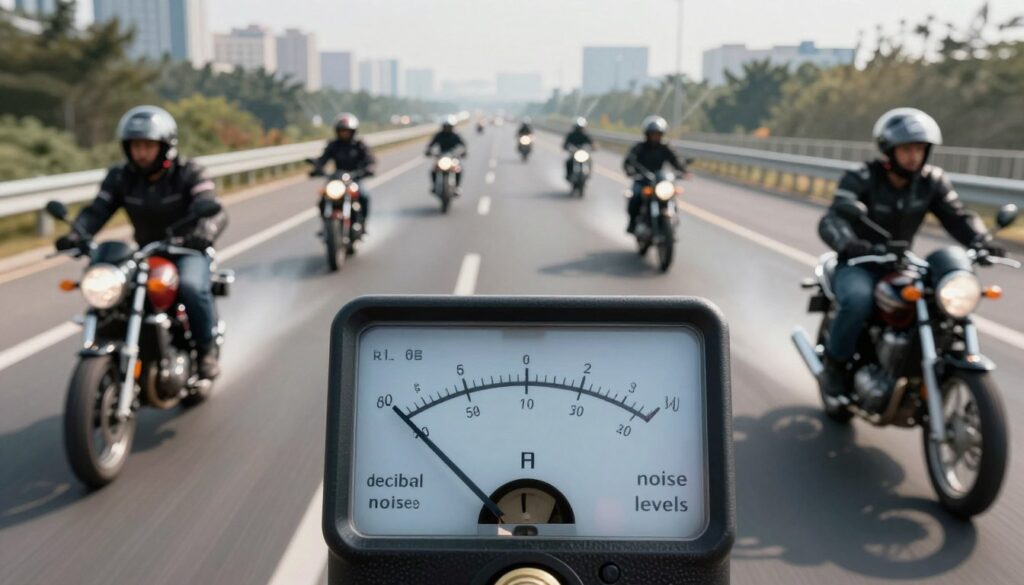
Helmet interior sound pressure levels can exceed 100 dB
Multiple studies show helmet interior sound pressure can top 100 dB at sustained highway speed. That combines wind roar and engine tones into a steady flood of high-frequency sounds.
Why 100+ dB can cause hearing damage in under 30 minutes
Exposure time is the risk factor: at 100+ dB the safe window can be under 30 minutes. Short bursts are less risky than long, continuous runs.
Why exhaust mods and surrounding traffic raise total exposure
Modified exhausts can push levels toward 110 dBA, and nearby trucks or group rides add up. The cumulative noise level—not one source—drives potential hearing loss.
- Translate decibels into risk: louder for longer equals more harm to hearing.
- Real-world benchmark: inside-helmet readings often exceed 100 dB on highways.
- Practical tip: use a decibel meter app for a rough sense, but don’t treat it as medical-grade data.
Bottom line: you don’t need years of exposure to damage hearing. The next section shows early signs you should never ignore.
What Happens When You Don’t Protect Hearing on Long Rides
After a long run, you might notice sounds seem muted — that muffled feeling is called a temporary threshold shift. It’s common, but it signals that your inner ear was stressed and needs rest, not something to brag about.
Temporary threshold shift vs permanent hearing loss
Temporary threshold shift shows as dull or muffled hearing for hours after exposure. It usually clears, but repeated episodes stack up and can cause permanent hearing loss.
Tinnitus and why it can be lifelong
Tinnitus is ringing, buzzing, or hissing that can start after loud runs. For some riders it fades, but for others the symptom becomes chronic and disrupts sleep and concentration.
Why repeated exposure speeds decline
Each long ride adds to cumulative harm. Small damage accumulates and can lead to lasting loss if you don’t act. Prevention is far easier than treatment.
- Temporary muffling is a warning, not a trophy.
- Cumulative noise causes permanent hearing damage over time.
- Simple steps now can help reduce future loss and keep you sharper on the road.
Earplugs Reduce Fatigue and Help You Ride Safer
When airflow becomes a steady roar, your brain works overtime to filter it out. That constant load steals mental energy and makes long-distance riding more tiring than it should be.
How reduced noise supports focus and concentration over hours in the saddle
High, constant noise forces your brain to focus on background sounds. This drains attention and reduces vigilance over time.
Using plugs helps reduce noise so you keep scanning, judging speed, and making smooth inputs for longer stretches.
Why less wind roar can feel like less stress in your helmet
Less roar lowers perceived stress and makes the ride feel calmer. You won’t be deaf to important cues; you’ll simply face fewer distracting sounds.
- Reduced fatigue leads to steadier throttle control and clearer hazard scanning.
- Riders report fewer irritability spikes and better decision-making on long days.
- With the right hearing protection, critical sounds and voices remain audible.
Expectations: earplugs won’t silence the road. They aim to bring sounds down to safer, less fatiguing levels so your safety and comfort improve.
Next, you’ll see how helmet-only, plugs-only, and a combined setup compare so you can pick the right balance for your riding needs.
Helmet Only vs Earplugs Only vs Helmet + Earplugs
Layering sound control is the smartest move for long rides—one item alone rarely cuts it. Below is a clear look at what each setup actually delivers on the road.
Limited noise with a helmet alone
Your helmet is vital for impact safety, but it gives only modest noise reduction. Typical shells reduce interior levels by about 5–7 dB, which helps slightly but can still leave you exposed at highway speeds.
What earplugs alone do
Properly fitted earplugs deliver meaningful reduction. Expect roughly 15–20 dB of attenuation when they sit correctly in your ear canal. For open-face or modular helmets, plugs can be especially effective.
Why helmet + plugs is the touring standard
Combined, you get about 20–25 dB total reduction. That layered approach lowers harmful noise so you stay comfortable and less fatigued on long runs.
- Helmet = impact first, modest noise benefit.
- Plugs = primary noise reduction; fit matters for real-world results.
- Helmet + plugs = maximum comfort and hearing safety for touring.
Practical tip: choose plugs that work with your helmet shape and any speaker setup. If plugs shift while you put the shell on, your actual reduction drops, so practice insertion and donning technique for best quality results.
Motorcycle Ear Protection Guide: How to Choose the Right Earplugs
Picking the right plugs starts with knowing where and how you ride most often. Match choices to your typical speeds, ride length, and whether wind or traffic creates most of the noise.
Rider-first checklist
Consider: commute or touring, sustained highway miles, windscreen buffeting, and how long you wear gear each day.
Pick the right reduction level
Aim for enough attenuation to cut wind roar but not so much that you lose situational awareness. Filtered designs give balanced reduction and let crucial sounds through.
Comfort, fit, and ear canal fit
Comfort is a performance feature. If plugs create pressure points you’ll stop using them. Low-profile motorcycle earplugs reduce liner contact and stay put when you don a helmet.
- Foam: best for max blocking and low cost.
- Filtered reusable: balance of clarity and safety.
- Custom-molded: ideal when universal fit fails your ear canal.
Final tip: test several options so you get the right hearing balance between safety and comfort before committing to long rides.
Understanding NRR, SNR, and What “Noise Reduction” Really Means
Understanding numerical ratings helps you pick the right balance between quiet and awareness. Ratings give a quick comparison, but they don’t replace fit, real-world conditions, or your riding needs.
SNR and how to use a single-number rating
SNR (Single Number Rating) is an ISO-based figure meant to summarize how much a product lowers sound. Use it to compare options, not as a guarantee of on-road results.
Why certifications matter
Look for standards-based tests such as ANSI S3.19-1974. Certified lab results beat vague marketing claims when you evaluate true protection.
Why more reduction isn’t always better
High-blocking foam can show a very high SNR, while filtered designs sit lower but keep clarity. Too much cut can hide sirens, horns, and traffic cues you need.
- Ratings simplify comparison, but fit and seal often change real-world levels most.
- Choose a reduction range that matches touring or mixed urban use.
- Prioritize the right hearing balance: safer exposure without losing critical signals.
Filtered vs Non-Filtered Earplugs for Motorcycling
Filters in modern plugs selectively tame the harshest parts of wind roar while leaving needed sounds intact. That frequency-focused approach targets the high, damaging tones and helps you keep situational awareness.
How filters shape what you hear
Filtered systems attenuate specific bands—usually the high-frequency wind components—so overall loudness falls but voices and alarms remain clearer. This preserves useful sound cues without over-blocking.
What must still be audible
You should still hear sirens, horns, nearby traffic, and basic conversation at stops. Filtered designs help keep those sounds obvious while they reduce noise that damages hearing over long runs.
Choosing between full block and filtered options
Non-filtered plugs give near-total block and are best when you want maximum quiet. Filtered plugs offer a more natural audio picture and often let you hear engine notes more clearly once wind roar is reduced.
- Commuters and comms users: often prefer filtered options for clearer speech and navigation audio.
- Very loud setups or track days: may need higher blocking for added safety.
- Balance tip: pick the option that reduces wind-focused harm but keeps emergency cues audible.
Practical note: modern Pinlock-style filtered designs are a solid compromise—reduce wind roar, keep music and speech clearer, and let you choose the right level of motorcycle earplugs for your riding needs.
Earplug Types You Can Buy for Riding
Not all hearing solutions are the same; each type trades clarity, comfort, and attenuation differently. Below are the main options so you can match choice to ride length, helmet fit, and budget.
Disposable foam for max blocking
Disposable foam plugs like Howard Leight Laser Lite offer very high attenuation (CE, SNR ~35). They are cheap and work well when you want maximum quiet for short stints.
The tradeoff is heavy muffling and single-use waste. Keep spares if you ride often.
Reusable high-fidelity for clarity
Filtered reusable models such as Loop Experience aim for clarity with roughly 17 dB reduction. They are reusable, cleanable, and often come with multiple tip sizes for a better fit.
Choose these if you need clearer speech and comms without losing too much situational awareness.
Custom-molded for long-ride comfort
Custom or moldable options (Decibullz and similar) give a secure seal and reduce pressure during long days in the saddle. They are ideal when off-the-shelf earplugs fail to fit comfortably.
Motorcycle earbuds vs rated hearing devices
Remember that standard motorcycle earbuds or audio plugs are not automatically certified as hearing protection. Look for rated attenuation if you rely on them for safety rather than just music.
- Match to your needs: short trips = disposable foam; daily comms = filtered reusable; long tours = custom-molded.
- Check fit under your helmet and practice insertion; a poor seal cuts real-world performance dramatically.
- Consider maintenance: reusable and custom options need cleaning and occasional replacement.
Fit Matters Most: Getting a Proper Seal in Your Ear Canal
A true seal in your canal is the single biggest factor that controls how much noise actually reaches your brain. A top-rated product with a poor seal can perform worse than a lower-rated plug that fits you perfectly. You need consistent seating to get the advertised reduction on long runs.
Why insertion technique changes real-world noise reduction
For foam tips, roll and compress, then pull your outer ear gently up and back while you insert. Hold the plug in place for 20–30 seconds so the foam expands fully inside the canal.
Reusable filtered plugs need a firm, even push to seat the flange. Check the seal with a simple hand cup test: if noise drops noticeably when you cup and rises when you remove your hand, the fit is right.
Common fit problems under a helmet
The most frequent issue is plugs shifting when cheek pads slide across the ears as you don a tight full-face helmet. Foam can be pushed out slightly and reusable tips can twist, reducing real-world attenuation.
- Mitigation: use low-profile designs and set plugs before you pull the helmet down.
- Slow donning: put the shell on slowly while stabilizing the plug with your finger.
- Practice: repeat insertion and helmet donning until they stay put together.
Choosing sizes and shapes for narrow or sensitive canals
If your canal is narrow or tender, try smaller tips, softer materials, or brands that include multiple sizes. Thermo-formable or custom-molded options are worth the investment when universal shapes cause soreness or poor fit.
Tip: test several sizes at home and wear them with your helmet for short rides to confirm long-ride comfort before committing.
Next, you’ll see how material choices affect comfort and long-term wear, linking fit to the best options for extended days in the saddle.
Materials and Comfort: Foam, TPE, and Silicone-Free Options
Comfort decides whether you keep plugs in for an entire day, not just the label on the box.
Thermo-forming materials that soften with body heat
Thermo-forming compounds such as Alpine’s ThermoShape are silicone-free and warm to your skin. They gently conform to your canal and reduce pressure points over hours of wear.
Riders report 8+ hour comfort because the material adapts rather than squeezing. That means a more secure fit without soreness.
Medical-grade TPE and pressure-free designs
Medical-grade TPE (used by brands like Pinlock) offers a soft, stable seal and cleans easily. It resists irritation and keeps its shape under a helmet.
For long stints, TPE gives steady comfort and easy maintenance.
Compare material feel and performance:
- Foam: very light and high-blocking but needs full expansion to work—uneven expansion reduces real-world results.
- Thermo-forming: molds with heat, cuts pressure points, and stays comfortable for hours.
- Medical-grade TPE: silicone-free, low-irritation, washable, and pressure-friendly for sensitive ear canals.
Pick plugs that match your canal size, offer pressure-free stems, and have smooth surfaces under the helmet. If your ear hurts after an hour, you won’t wear them and your hearing health loses.
Bottom line: the best choice is the one you will wear all day—prioritize fit, comfort, and consistent quality so your ears stay safe and you stay focused.
Top Picks for Long-Distance Riders Based on Real-World Use
You want reliable choices that balance comfort, fit, and real-world noise control for long days in the saddle.
Best all-around touring option — Alpine MotoSafe Race
Why it stands out: ThermoShape silicone-free tips give all-day comfort and stable fit for 8+ hours. The kit includes a fitting tool and case, and delivers ~20 dB attenuation while staying low-profile under helmets.
Best balance of clarity and reduction — Loop Experience 2 / 2 Plus
Why riders like it: Offers about 17 dB of noise reduction with filtered design that preserves voices and traffic cues. The Plus model adds an optional Mute for extra reduction when you need it.
Best budget disposable for max blocking — Howard Leight Laser Lite
Why choose it: CE-rated SNR ~35 foam plugs block the most noise and are cheap and effective. The tradeoff is heavy muffling and single-use waste, so carry spares for long tours.
Best custom-mold value pick — Decibullz
Why consider them: Remoldable plugs give a custom seal when universal options fail. They’re an affordable way to solve fit issues without paying for professional casting.
- How to pick: touring days = comfort and stability first; loud bikes/windy setups = more reduction and foam; comms-heavy rides = filtered clarity.
- Consider helmet fit and whether the plugs shift when you don the shell.
- Focus on real-world quality and ease of insertion over marketing claims.
Choosing Earplugs for Intercoms, Helmet Speakers, and Navigation Audio
Clear speech from your headset depends as much on background noise as on speaker quality. With high wind levels, you often raise volume to hear prompts. That increases risk and fatigue.
How filtered plugs keep speech and music clearer at safer volumes
Filtered designs such as Pinlock-style plugs reduce wind roar while preserving voices and music. That means you can run lower comms volume and still catch instructions, which helps reduce noise exposure and listening fatigue.
What to look for if you ride with comms every day
Prioritize high-fidelity or filtered options over full-block foam. They retain mid-range frequencies so speech stays intelligible while they reduce the damaging highs.
- Low-profile tips: less chance of helmet shifting the seal.
- Stable seal: keeps sound consistent when you don the shell.
- Easy insertion with gloves off: practical for daily commuters.
Test-ride checklist and earbuds clarification
On a short test ride, listen for clear voice prompts, understandable intercom speech, and audible horns or sirens without harsh wind roar. If in-ear audio is your choice, confirm whether those “motorcycle earbuds” also provide rated attenuation—don’t assume in-ear equals hearing protection.
Everyday rider checklist: comfort for hours, stable seal, compatibility with helmet speakers, and simple cleaning. These options help you reduce noise while keeping critical sound cues audible and your hearing safer.
Care, Cleaning, and Replacement: Keeping Protection Effective
Treat your hearing gear like any precision tool: clean it, store it properly, and replace worn parts when needed. Good maintenance keeps the rated performance and reduces irritation in your ear.
How to wash reusable items and keep filters clear
For reusable earplugs, wash tips in warm soapy water after several uses. Rinse thoroughly and let them air dry on a clean towel.
If your model uses removable filters, take them out and blow gently or rinse per the maker’s instructions. Never use solvents that can deform parts.
Simple routine: mild soap, rinse, dry, reassemble.
When to replace disposables, tips, or the whole item
Replace foam disposables after a day of heavy use or when they no longer expand and seal. For reusable tips and filters, swap them when you see cracks, tears, or a persistent loss of seal.
Rule of thumb: if comfort or quality drops, replace it.
Carry cases and storage habits that prevent damage
Store earplugs in the included case to keep lint and grease away. Avoid hot storage that can warp materials. Pack a backup pair in your bag so you never ride unprotected.
- Keep clean cases in a dry spot.
- Avoid pockets with coins or keys.
- Rotate spares on long trips.
Why maintenance matters: dirty tips can irritate your ear and clogged filters reduce real-world performance. Regular care ensures your hearing protection delivers the quality and results the rating promises.
Is It Legal to Wear Earplugs on a Motorcycle in the United States?
You can protect your hearing and still obey local law, but rules change from state to state. Always check statutes or official guidance before you ride across borders.
Why state laws vary and what California’s guidance suggests
State statutes differ on covering both sides of your head while operating a vehicle. Some ban devices that block required warning sounds.
California DMV guidance allows hearing protectors when they are designed to reduce injurious noise levels. However, they must not prevent you from hearing sirens, horns, or other critical alerts.
How to stay compliant while still protecting your ears
Take a compliance-first approach so safety and hearing health both win.
- Verify local law before long trips—rules vary by state.
- Choose certified hearing protection, not improvised earbuds, so you meet labeling and performance standards.
- Pick filtered, low-profile models that lower harmful exposure while keeping sirens and horns audible.
Bottom line: select motorcycle-specific earplugs that balance safety and audibility. You’re not trying to tune out the world—you’re preventing hearing loss and avoiding long-term damage from repeated exposure.
Conclusion
What may feel like routine riding can deliver dangerous decibel levels in surprisingly short spans. Long-distance wind and road noise often top 100 dB, so wearing motorcycle earplugs consistently is the simplest way to reduce harm and keep noise manageable.
At 100+ dB, hearing damage and hearing loss can occur within minutes. Treat exposure as urgent: a combined helmet plus earplugs approach gives the best real-world reduction of harmful levels.
When you shop, prioritize the right reduction range, all-day comfort, a secure fit under your shell, and clarity so you still hear traffic cues. Pick a plug type for your settings, practice insertion until the seal is reliable, and carry a spare set.
Act now: choose hearing protection that helps you protect hearing, cut fatigue, and stay focused without missing critical sounds.