You ride long days and you want gear that helps, not distracts. This introduction sets expectations for a practical touring “tech stack” that reduces fatigue and improves safety on the road.
Expect clear benefits: navigation that stays readable, headsets that keep you connected, cameras that document trips, and heated grips or comfort items that cut down on cold and strain.
By “motorcycle travel with tech gadgets” we mean three practical categories: gear mounted to the bike, items worn on your body, and backups you pack. Each item should be weatherproof, reliable, and glove-friendly.
This article compares categories—navigation, comms, cameras, safety, comfort, security, maintenance, and storage—and calls out tested models riders trust. You’ll get buying advice that favors low-distraction design over flashy features.
Finally, remember that the “best” setup depends on your bike, routes, and budget. Each section will explain what to look for and why it matters, so you can pick gear that improves your real-world experience.
What to Look for in Long-Distance Motorcycle Tech Gadgets
Long rides demand tools that survive rain, vibration, and hours of use without fuss. Start by deciding which items must protect you and which are comfort add-ons.
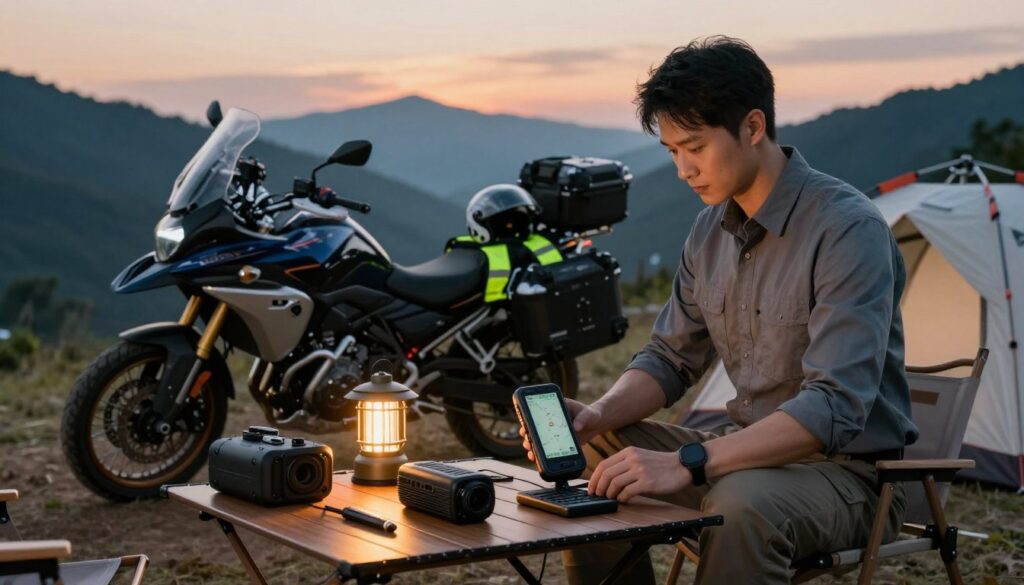
Prioritize safety, battery life, and weatherproof design
Safety comes first: visibility, crash protection, and reliable evidence capture outrank entertainment. One incident can end your day, so buy protective gear before comfort items.
Controls, displays, and distraction reduction
Choose glove-friendly controls and anti-glare displays. Simple, tactile buttons let you make quick changes without long hands-off moments. That lowers distraction and keeps your focus on riding.
Power planning: hardwired vs USB
Plan battery and charging before you ride. Hardwire always-on items like GPS and heated grips to fused outlets. Use USB‑C for flexible accessories, but avoid loose cables that create intermittent connections.
- Estimate daily runtime and mark devices that must stay on all day.
- Translate IP ratings into reality: IPX7/IP67 resist rain and washdowns; sealed ports beat cosmetic ruggedness.
- Keep the cockpit lean—too many mounts hurt sightlines and reduce overall quality.
- Rule of thumb: if you can’t operate it quickly while wearing gloves, it doesn’t belong on the bars.
Navigation Tech That Keeps You on the Right Road
When the road bends and cell signal drops, dependable navigation saves time and stress. Pick a system that matches how you ride and how cluttered you want the cockpit to be.
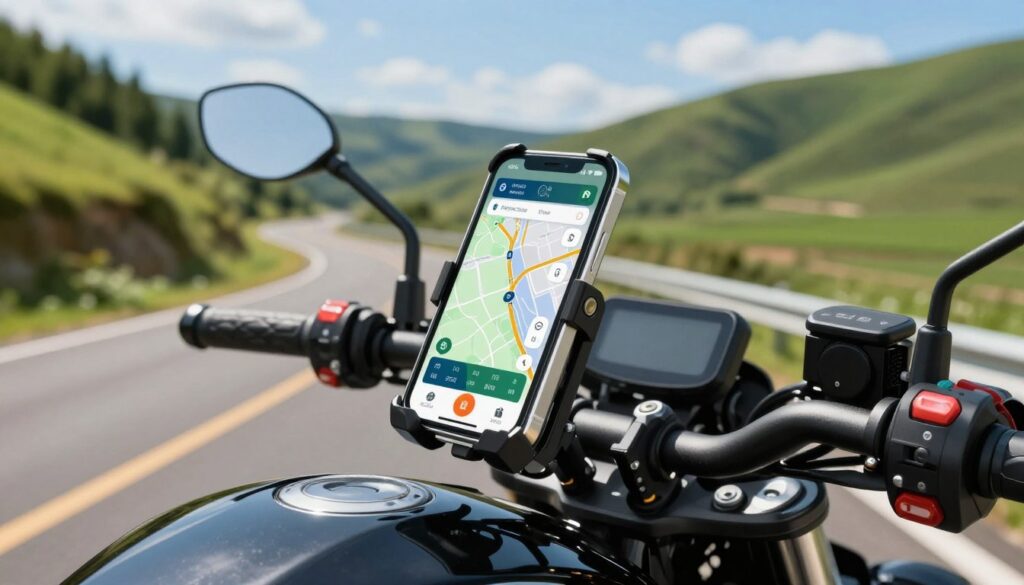
Dedicated GPS: rugged and reliable
TomTom Rider 550 is built for long days: IPX7 waterproofing, a 4.3″ touchscreen, Wi‑Fi map updates, Bluetooth for phone and intercom, and a fused RAM holder you can hardwire to the bike battery. It has 16GB plus microSD and curated routes riders value. Note: postcode accuracy can be off, so verify POIs or coordinates near unfamiliar towns.
Minimalist nav for a clean cockpit
Beeline Moto II keeps things simple. An anti‑glare IPS display and long battery life preserve your bike’s look while giving clear prompts. It relies on your phone and app, so plan for steady power and signal.
Phone navigation done right
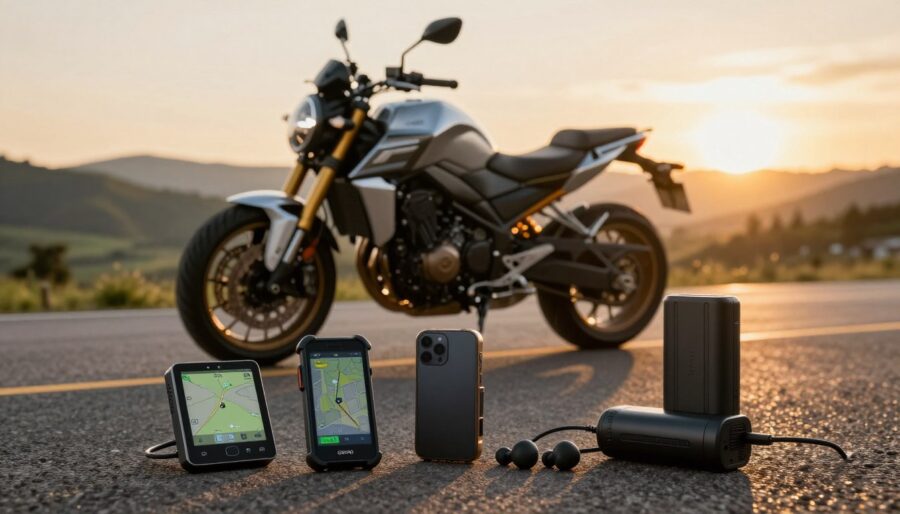
Use a Quad Lock phone mount, vibration damping, and wired wireless charging to keep a phone alive and protected. Mount devices where you can glance quickly without blocking instruments, and route cables to avoid snags during full-lock turns.
- Dedicated GPS: best in rain, heavy vibration, and multi-day touring.
- Minimalist unit: preserves sightlines and reduces clutter.
- Phone-based: flexible, but needs power planning and a solid mount.
Helmet Communication and Intercom Systems for Music, Calls, and Group Rides
A reliable intercom turns quiet helmets into command centers. You’ll take calls, hear GPS prompts, and coordinate fuel or food stops without pulling over. That reduces interruptions and keeps group rides flowing.
Bluetooth vs Mesh: what you’ll notice on the road
Bluetooth pairs easily for one-to-one links but can drop when riders spread out. Mesh creates a dynamic network, so voices stay through gaps and reconnections happen automatically.
Range claims vary in real terrain—hills, traffic, and helmets affect signal more than open-field numbers.
Which system fits your group size?
- If you typically ride two-up, a simple Bluetooth intercom is quick and reliable.
- For groups of four or more, prioritize Mesh reliability and automatic reconnection.
- Check rider count limits before you buy; real-world range is shorter than specs imply.
Top picks and why they matter
Sena 50R: Mesh 2.0 plus Bluetooth 5.0, supports multi-bike Mesh (up to eight others), ~1.2 mile range, and ~13 hours battery life. Compact design and chunky buttons suit long days.
Cardo Freecom 4X: Universal fit, 40mm JBL speakers, natural voice control, connects up to four riders, ~2.2 mile range, and similar battery life. Great if sound quality and simple voice commands matter to you.
Setup tips to avoid fatigue and stay safe
- Keep volume lower than you think and use earplugs to cut wind noise while keeping clarity.
- Tune EQ and levels in the companion app before you ride.
- Use big, glove-friendly controls and voice commands so your hands stay on the bars.
- Pre-tour routine: pair phone + GPS + intercom, verify mic placement, and test a short call.
Camera Tech to Record Your Rides and Capture Evidence
Capture what matters on long rides: scenery, near-misses, and proof when you need it most. A good camera does double duty—preserving memories and documenting incidents for safety.
Why 360 systems matter for touring
360 cameras free you from perfect aim. You can reframe corners and scenery later, so small framing errors on the road don’t ruin the clip.
What the Insta360 X4 adds
The X4 shoots up to 8K, which makes reframing cleaner and keeps image quality high after editing. FlowState stabilization improves performance on rough pavement, and it’s waterproof to 10m and rated to -40°C.
Mounting, stability, and field tips
Choose mounts that resist vibration and stay clear of hot exhaust. Test angles before a full day, protect lenses, and verify seals rather than trusting “splash proof” labels.
- Balance weight vs comfort—203g can affect helmet feel.
- Plan battery swaps; X4 runs ~135 minutes per charge.
- Budget for new accessories and confirm compatibility before purchase.
Used right, a compact 360 camera becomes a reliable part of your motorcycle system—raising footage quality and giving riders useful evidence without constant fiddling on the road.
Safety Tech Upgrades That Can Protect Your Life
Start your tech stack by protecting the one thing you can’t replace: your body. If you buy only a few upgrades, prioritize items that reduce injury risk and improve your odds after an incident.
Wearable airbag protection: Helite e‑Turtle 2
The Helite e‑Turtle 2 is an over‑jacket airbag vest that adds a Level 2 back protector and deploys in roughly 0.094s. It runs about 25 hours per charge and can be re‑armed by replacing the gas canister if the bladder is intact.
An optional fork sensor pack halves reaction time and improves coverage for low‑speed or stopped impacts. Service is recommended every two years and the unit carries a four‑year warranty.
Dash cams for incident documentation
Pick a dash cam system with HD or 4K front/rear coverage, GPS tagging, loop recording, and waterproof housing. These features preserve location data and keep storage managed so you have usable footage when you need it.
Blind spot detection and smart visibility aids
Blind spot systems use radar or ultrasonic sensors and warn you via LEDs, helmet vibration, or sounds. They help during multi‑lane highway passing, especially when panniers or luggage reduce rearward view.
Smart brake lights boost visibility by changing brightness or flashing under hard braking. That extra signal reduces rear‑end risk during sudden stops.
Tire pressure monitoring and implementation notes
TPMS gives real‑time pressure alerts to prevent underinflation issues that can ruin handling. Early warnings buy you time to stop safely and fix a problem before it becomes critical.
- Practical tip: install safety systems cleanly, test alerts, and keep them set‑and‑forget so they protect you without adding distraction.
- Buyer’s note: balance price and quality; prioritize core protective items like an airbag vest and a reliable dash cam first.
Cold-Weather and Comfort Tech for More Time in the Saddle
Staying warm extends your focus and lets you ride longer days without losing control. Comfort works as a safety multiplier: when you’re warm and less tired, your reaction time and judgment stay sharper over long hours on the road.
Heated grips that feel factory
Heated grips are a high‑ROI upgrade because they warm hands without bulky gloves that dull fine control. The Oxford HotGrips Pro warms quickly, offers clear heat settings, and looks close to OE fitment.
Key perks: an IP65 weatherproof rating, a battery‑saving mode to prevent flat batteries, trimmable length for 7/8″ bars, and auto‑dimming LED lights to cut nighttime distraction.
Smart heated gear and controllers
Smart liners and gloves reduce bulk and keep core heat balanced. Use an app or a dedicated controller to tweak levels as elevation or wind chill changes so you don’t overheat then cool too fast when stopped.
Check your bike charging capacity before adding heated items and manage output to protect the battery during long idle stops.
Windscreens and wind management
Proper wind management lowers chest and neck strain, stabilizes your helmet, and makes highway hours feel shorter. A well‑shaped windscreen deflects debris and reduces fatigue, improving overall performance and comfort.
- Fitment note: confirm lever reach, handguard clearance, and steering lock before final install.
- Layering tip: use smart heated layers under a shell to keep bulk down and maintain quality of movement.
- Budget and price: prioritize grips first for immediate benefit, then add app‑controlled gear as budget permits.
Motorcycle Travel With Tech Gadgets: Build Your Touring Tech Stack
C> A clear packing order stops clutter from stealing focus and adds reliability to every ride.
A practical packing order
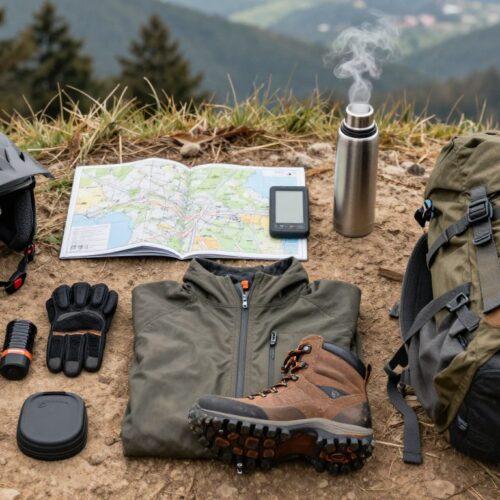
Keep permanent kit on the bike: GPS, wired charger, heated grip controller, and a secure mount for quick access.
Wear essential gear: airbag vest and comms sit on your body for immediate protection and use.
Pack backups: power bank, spare cables, extra camera battery, and small accessories in a top bag or pannier.
Connectivity plan for remote routes
No service means no cell-based maps or live weather. A small satellite hotspot like the SomeWear Global Hotspot links to your phone via an app and enables SOS and position shares.
It requires a device purchase and Iridium service, but it can save hours in remote rescues.
Also keep offline maps updated on your GPS and phone before you leave.
Two-minute pre-ride checklist
- Mounts tightened, cables stowed, and ignition power confirmed.
- Devices paired, volumes set, and camera storage cleared.
- Route loaded, offline maps downloaded, and phone charging ready.
Ride mode: minimize notifications and keep only essential displays visible. Repeat this routine each morning to prevent avoidable failures and keep your system dependable on long rides.
Security and Recovery Gadgets for Stops, Overnights, and City Parking
Unfamiliar parking spots and predictable routines create windows for theft. Stops at motels, gas stations, and street curbs are higher risk because thieves exploit short delays and known behaviors.
Low-profile tracking gives you peace of mind. A CNC-machined aluminum AirTag mount clamps to a hidden point, secures the tag with Torx screws, and links to Apple Find My so you can check real-time position from your iPhone.
Real-world limits and how to use them
- Mount size can constrain placement; the compact clamp may not fit all frames or racks.
- AirTag is iPhone-only—Android users need a different gps solution.
- Tracking speeds recovery; it won’t stop a theft in progress but reduces the “where did it go?” panic.
Layered security strategy
- Use visible physical locks (disc locks or chains) to deter opportunists.
- Combine them with tracking and movement alerts so you know if the bike moves.
- Choose weather-resistant accessories that are easy to use daily and suit your design and price needs.
Practical tips: vary parking locations, lock to immovable objects when possible, and avoid displaying expensive items that invite attention.
Maintenance and Storage Gadgets That Make Touring Easier
Small maintenance wins free up hours on the road and cut end-of-day chores.
Why it matters: less time wrenching and repacking means more time riding and lower fatigue for the next day. Good maintenance and smart storage also protect quality components and improve performance over long rides.
Automated chain oiling: Scottoiler xSystem overview
The Scottoiler xSystem is a 12V pump that uses 3‑axis accelerometers to sense motion and adjust oiling automatically. It features five flow levels you set via buttons and a 50ml reservoir that many riders top up roughly every 1,000 miles.
Key perks: easy install, direct battery connection, automatic start/stop, and a 2‑year warranty. This system reduces daily chain lubing and keeps the chain in better shape on multi‑day routes.
Practical notes: start on medium flow, raise output in wet weather, and plan oil top‑ups by mileage so you don’t run dry mid‑trip.
Luggage that works as a system, not just bags
Your luggage setup affects stability, comfort, and how fast you can grab essentials at a stop. Treat storage as a system: combine fast-access tank bags, aerodynamic backpacks for flexible carry, and side bags or top cases for bulk and weather protection.
- Tank bags: quick access for phone, maps, and snacks.
- Aerodynamic backpacks: lower wind drag and often include hydration compatibility for long rides.
- Side bags/top cases: hard cases add theft resistance; soft bags save price and packability but need smart locking.
- Fitment tips: keep weight low and forward, avoid heel interference, and confirm mounts don’t rub bodywork or reduce passenger space.
- Security tie‑in: choose hard cases for theft resistance or use locks and hidden anchors for soft accessories.
- Packing tip: balance gear to preserve handling and comfort on long days.
Choosing the right maintenance system and storage combo makes your bike easier to live with on long tours and keeps you focused on the road, not chores.
Conclusion
Choose gear that earns its place by improving safety, reducing fuss, and lasting through days on the road.
The core takeaway: the best touring setup boosts safety, comfort, and reliability without adding distraction or upkeep. Start purchases by protecting the rider first, then add navigation and charging, then communication, comfort, and finally content or bonus accessories.
Build the stack around your bike and how you ride—solo or in groups, highway miles or backroads, fair‑weather or four‑season. Plan for battery life: hardwire items that must run all day and keep a simple backup for your phone.
Remember systems matter: clean mounts, routed cables, and pairing routines deliver more real‑world performance than any single piece of technology. Treat mounts and power as part of the kit.
Practical next step: pick 2–3 upgrades you’ll use every ride, install them cleanly, test them locally, then scale up before your next long-distance outing. That approach protects quality, extends life, and improves your riding experience.