This buyer’s guide shows what to pack, who it serves, and how to think about weight and placement. You’ll read practical advice for two-wheel riders on ADV bikes, dual-sports, and small-displacement explorers. The focus is self-reliant travel that mixes pavement, dirt roads, and camping.
Start with the basics: keep weight low, forward, and centered. Every pound affects mileage, tire life, and handling. You’ll learn why multi-use items and smart luggage choices matter.
This article is organized in a clear order: packing and luggage, core carry systems, tools and tires, shelter/sleep/kitchen/water, then riding layers and documents. I’ll use real examples (Mosko Moto, Givi, Giant Loop, Jetboil, MSR, Therm-a-Rest) to make buying easier without naming any single required brand.
Decision framework: prioritize safety and reliability, then comfort, then convenience. Justify every item by weight, space, and usefulness. This guide is written for U.S.-based riders with notes on cross-border planning.
Next, we start with the most common mistake: packing too much and loading it in the wrong place on the bike.
How to Pack for Overlanding on a Motorcycle Without Ruining Your Ride
Think of weight as an invisible passenger that alters braking, balance, and fuel use. Every pound you add affects braking distance, suspension response, and cornering feel on the road. Those effects get worse on dirt, sand, and washboard.
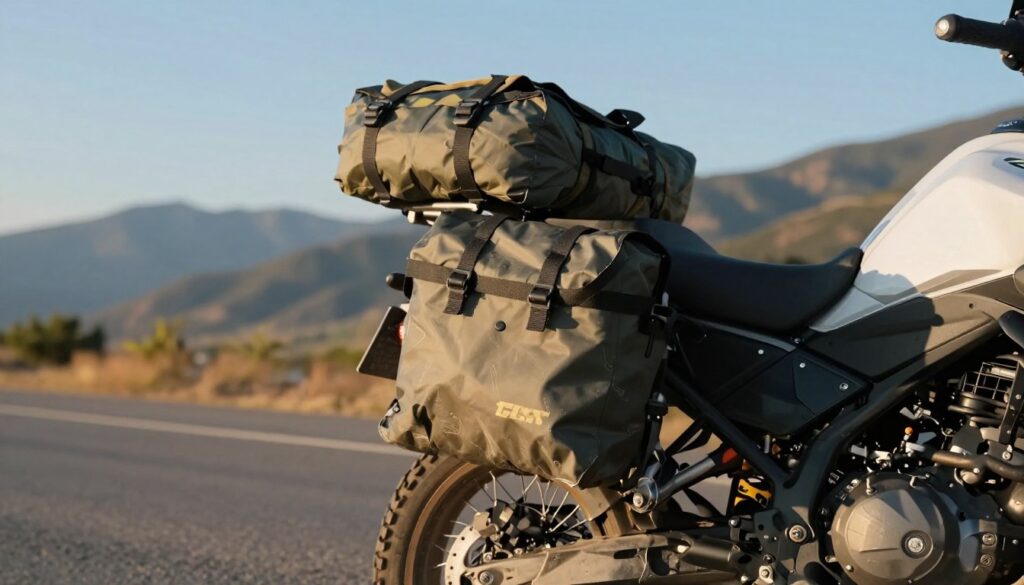
Why weight changes handling, tire wear, and fuel mileage
Extra mass increases stopping distance and loads the suspension. Tires wear faster and fuel consumption rises, especially at highway speeds when bulky bags act like a sail.
Where to place your kit: low, forward, centered
Put dense items low in panniers or near the seat. Keep light, compressible stuff higher. Anything behind the rear wheel or above the bike’s center will destabilize handling.
Minimalism that works and realistic expectations
If an item can’t fix a problem, keep you safe, or aid recovery at camp, it’s a “nice-to-have.” Choose multi-use solutions—a waterproof dry bag that doubles as a wash sack or a pot that makes coffee.
- Do a post-trip review each time to cut dead weight and refine your kit.
- Pack in layers so you can access essentials quickly on a long trip.
- Let your setup evolve with time and experience; small changes add up.
Next, we’ll look at how the right luggage determines capacity, security, and access on the road.
Choosing Moto Luggage That Matches Your Trip, Road Conditions, and Security Needs
Your luggage choice shapes how the bike handles, how secure your valuables stay, and how fast you can move. Pick options that match terrain, stops, and how often you’ll unpack.
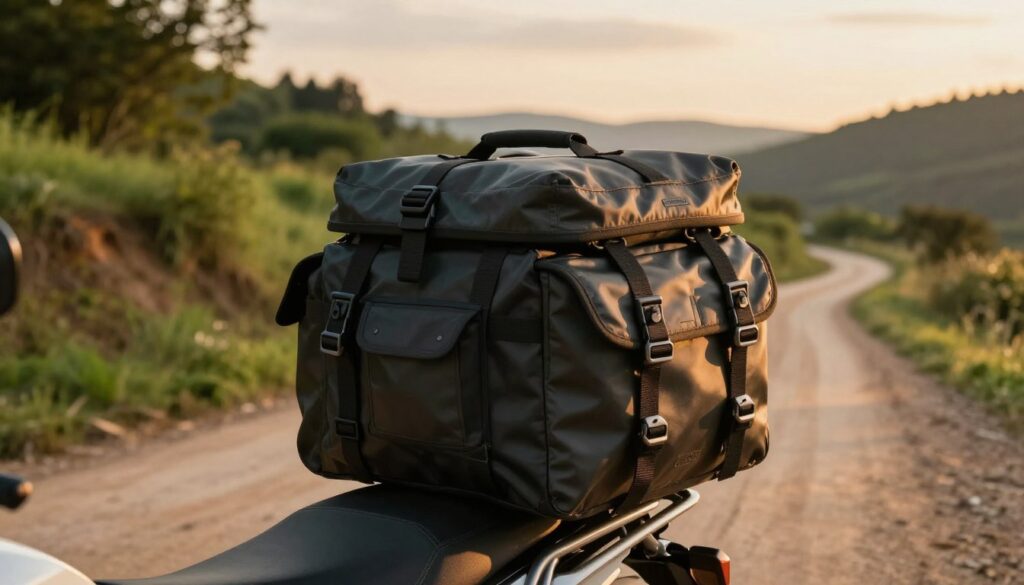
Soft bags vs. hard cases
Soft luggage uses ballistic nylon with roll-top closures and built-in waterproofing. It is lighter, compresses, and can lower injury risk in a fall by not trapping a leg. Hard cases add crush protection and lockable storage for cameras, electronics, and documents.
Rackless systems
A rackless setup saves weight and cost. The Mosko Moto Reckless 80L is a concrete example: a harness, two 25L dry bags, plus a 22L tail pack that keeps things simple without a heavy frame.
Practical choices and tie-downs
Choose Givi Outback aluminum cases when you need security, accepting added width and weight. Use a small tank bag for quick access to essentials. Finally, treat extra straps as safety gear—tie-down discipline prevents load shift and solves surprises.
Next: build a repeatable carry system so packing and unpacking is fast each day.
Overlanding Motorcycle Gear List: Core Carry System and Pack Strategy
Designing a core carry system starts with assigning a clear home for every category of kit. When each category has a place, you cut repack time and reduce chances of leaving critical items at camp.
Dry bags, duffels, and packing cubes
Use a waterproof dry bag for clothes and your sleep kit. A tough duffel can work as a single-opening solution when you are tired. Packing cubes or mesh organizers keep clothes, toiletries, and electronics separate so you pull one cube and move on.
Day-pack layer and quick access
Top-load a lightweight day pack on your main dry bag so rain jackets, wallets, passports, and flip-flops stay reachable. The REI Flash 18 strapped to a dry bag is a practical example of this approach.
Space hacks and arrival routine
Skip rigid stuff sacks; soft fabric fills pannier nooks and improves ride balance. Use waterproof stuff sacks at camp as a wash system for dirty clothes.
- Remove the day pack first.
- Drop one main bag, then set up shelter.
- Pull sleep kit last so you stay dry and fed fast.
Next: focus on the maintenance kit that keeps your bike moving when something fails.
Tools and Daily Maintenance Kit for Adventure Bikes
A dependable tool roll is the difference between a quick roadside fix and a ruined day on the road.
What to carry versus what stays at home
Keep a compact everyday kit that removes wheels, adjusts controls, and tightens fasteners. Leave heavy bench tools at home unless your route needs them.
Build the kit around your bike
Do a full pre-trip maintenance session with your kit. That reveals which sockets and bits you actually touch and saves time packing extra things.
Consumables and small spares
- Blue Loctite, a roll of duct tape, zip ties, spare wire, and a small tub of grease.
- Master link (for chain bikes), spare fuses, extra bulbs, and a duplicate key kept separately.
- Compact examples: the SBVTools Pro Mechanic kit shows how Torx, hex, wrenches, sockets, and ratchets fit a tidy pouch.
Field fixes and when to use them
Carry Quick Steel or similar epoxy for temporary case or radiator patches. Use it only to get you to a shop—don’t rely on epoxy as a permanent repair.
Next: flats are the most common roadside failure. The right tire repair kit and inflation plan keep you moving without losing a full day.
Tire Repair and Flat-Fix Setup for Tube and Tubeless Wheels
A puncture can be solved quickly when you carry the right parts and practice the fix. Pack a repair kit that matches your wheel type: plugs and a reamer for tubeless, patches and glue for tubes, plus a valve-core tool for both.
Use the BikeMaster Tire And Tube Flat Repair Kit as a baseline: it includes patches, plugs, tools, glue, and four CO2 cartridges with a valve/line. That setup supports both tubeless and tube repairs and gives a practical starting point.
- Air options: carry CO2 for speed and a compact pump for repeatable use. Redundancy matters when a first fill won’t hold or you must reseat a bead.
- Wheel removal: know your axle sockets, axle spacers, and torque points. Practice removing the wheel at home so you can do it safely on the shoulder.
- Recovery basics: a short tow rope and basic wheel-removal tools keep you from pushing through unsafe riding conditions.
For sidewall cuts, carry stitching materials like fishing line or thin wire and use temporary reinforcement to get to a shop. Tire fixes can cost hours, so having stormproof shelter saves you time and comfort when plans change.
Camping Shelter That Packs Small and Stays Stormproof
Shelter that balances weight and weather resistance changes how well you recover after a hard riding day. Choose a durable tent that packs down small and still sheds wind and rain. Shelter is what lets you restore energy for the next day, even when the forecast turns bad.
One-person vs. two-person trade-offs
One-person tents win on size and weight. They free up pannier space and are faster to pitch.
Two-person tents add livability. You can change layers, store a small amount of camping gear under the fly, and wait out rain without leaving the sleeping area.
Vestibule and packing pro tip
Vestibule space is non-negotiable—keep boots, wet items, and helmets under cover so your sleeping area stays dry and clean.
A smart packing hack: split the fly and body into separate panniers. That way you can pitch only the fly on warm, buggy nights or set up the full tent in storms, reducing repacking time.
Protection for multi-day trips
- Bring a footprint or groundsheet to protect the floor from abrasion and wet ground.
- Carry a pole repair sleeve or splint, extra stakes, and some guyline for quick fixes.
- Small patch kits keep fabric usable for days of travel.
Buyer-ready examples: consider the NEMO Hornet Ultralight 2P for ultralight performance or the REI Trail Hut 2 with footprint if you want more livable space at a lower price. Shelter keeps wind and rain off you; your sleeping system does the rest to restore you for long riding days.
Sleeping Gear: Bag, Quilt, Pad, and Pillow Choices for Better Riding Days
A reliable sleep setup is the unsung tool that keeps your reaction times sharp on long trips. Rested riders make better choices and start early without feeling wrecked. Invest in comfort to protect your safety on the road.
Down vs. synthetic for pack size and moisture
Down usually packs smaller and saves space for other things. Colder temperature ratings add bulk, so don’t skimp on warmth by relying only on base layers.
Synthetic copes better with wet conditions and still insulates when damp. Choose the REI Magma 30 down bag if you want minimal pack size, or the Therm-a-Rest Corus 32 quilt for modular layering.
Pad priorities: insulation and packability
Pick a pad with the right R-value first, then check compressed size. The Therm-a-Rest NeoAir XLite NXT is useful because it compresses to about a water bottle size, making space planning simple.
Pillow and dual-use choices
A stuff-sack pillow saves room: fill it with clothes and it becomes a proper pillow at camp. The Therm-A-Rest Stuff Sack Pillow is a cheap, practical option that doubles as storage.
Lightweight wash method
Use a waterproof stuff sack for washing: soap, warm water, knead, rinse, then hang items on the bike to dry. This way you keep fresh clothes without carrying extra weight.
- Why it matters: better sleep reduces fatigue and improves reaction time, making multi-day riding safer.
- Pack tip: balance warmth, pack size, and moisture resilience when you pick a bag or quilt.
Next: your kitchen and water plan finish the recovery picture so long hot days feel manageable.
Camp Kitchen and Coffee Setup for Lightweight Travel
A small, well-packed kitchen keeps your nights simple and your pack light. Focus on fast-boil systems and nesting so you can eat hot food and make coffee without fuss.
Fast-boil stoves and multi-fuel options
Fast-boil systems like the Jetboil Flash heat water under two minutes and pack into their own pot. That saves space and time when you arrive late at night.
For remote routes, consider a multi-fuel stove such as the MSR WhisperLite. It can run on siphoned fuel, so you carry less extra fuel and extend range.
Cook kit nesting and coffee on the trail
Pack pot + stove + lighter + a small scrubber + fuel all inside one case so you can grab the whole kit quickly. The MSR PocketRocket Deluxe nests a pressure-regulated stove into a compact cookset with room for a canister.
A simple coffee hack: bring a French press plunger that fits your stove pot diameter. Use the pot as a makeshift brewer and skip a separate coffee item.
Cleanup basics
- Scrubber and soap: a tiny squeeze bottle and a small scrub pad are enough.
- Camp sink approach: repurpose a waterproof liner or bag for washing and rinsing to save weight.
- Packing rule: keep all cooking items in one case so night setups are fast and tidy.
Next: plan water and hydration—the right storage and purification keep cooking and recovery working on hot or dry stretches.
Water, Hydration, and Storage for Hot Days and Dry Routes
Heat and long miles drain your body faster than you expect, so plan water early and often.
Dehydration shows up as fatigue, slower decisions, and poor coordination on technical sections. In summer conditions this becomes a safety issue, not just an annoyance.
Two-system approach: use a sip-ready hydration bladder for riding and an insulated bottle for cold water at stops and camp. A 40 fl. oz. Hydro Flask wide-mouth bottle keeps drinks cold and survives rough use.
High-capacity and storage
For remote stretches carry a collapsible MSR Dromedary 6L bag. Store heavy water low and centered on the bike so handling stays predictable. Keep caps and valves in sealed pockets to avoid leaks soaking clothes.
Simple purification plan
When resupply is uncertain, pack both chemical tablets and a compact filter. Tablets are light and great for multi-day emergency use; filters work better if you expect frequent refills from murky sources.
- Size your carry for the route and climate—add liters for dry days or long road sections between services.
- Rotate bottle and bladder use so one stays cold while you sip from the other.
- Seal connections and test filling/emptying before you leave.
Water is only one part of comfort; next, your clothing and layer system control heat and cold the rest of the way while you travel.
Riding Gear and Off-Bike Clothing That Earns Its Space
Choose clothing that earns its space by working for both the ride and camp. A small, thoughtful kit saves weight and makes every morning faster.
Layering the basics
Start with a moisture-wicking base (merino or synthetic). Add a thin fleece or technical mid-layer for warmth.
Carry a proper rain suit that seals—waterproof seams matter more than breathability specs when you need to stay dry.
Gloves, socks, and boots
Bring summer and cold gloves if routes cross elevation. Good socks wick and cut blisters; small comfort issues become big fatigue over days.
Pick boots with ankle support, all-day comfort, and weather resistance. If you prefer motocross boots, add waterproof socks for long wet rides.
Off-bike clothing and small essentials
Pack lightweight, quick-dry clothes (non-cotton) and a compact pair of shoes for camp. These save size and dry fast overnight.
- Must-have small items: earplugs, headlamp for night tasks, sunscreen, insect repellent, wet wipes, and hand sanitizer.
Manage liquids in sealed cases and skip flashy jewelry from home. Next, plan navigation, communication, documents, and emergency coverage so you can find your way and call for help when needed.
Navigation, Communication, Documents, and Safety Planning for the U.S. and Beyond
A layered approach to maps, comms, and documents gives you options when phone service disappears. Build a navigation stack: preload offline maps on your phone, carry paper maps for the region, and add a dedicated GPS when your route goes remote.
Navigation stack and apps
Use REVER, Google offline maps, OSM offline maps, and iOverlander. Preload tiles and waypoints before you lose service. Keep a folded paper map as a last-resort backup—paper still works when batteries fail.
Emergency coverage and medevac planning
Confirm your medical insurance covers out-of-state or international care. Consider medevac or air-ambulance insurance if you ride far from hospitals. Keep emergency contacts and health info where first responders can find them.
Tracking, SOS, and check-ins
Carry a satellite messenger or GPS tracker with a service plan. Set regular check-in windows and tell someone your expected route and time. A missed check-in should trigger a plan to call local authorities.
Document checklist and secure storage
- Carry your driver’s license with endorsement, registration, and insurance paperwork.
- Bring passport, visas, and an international driving permit when needed; keep copies separate from the originals.
- Store valuables and papers in water-resistant pouches or use your hydration pack as an on-body safe for spare cash and cards.
Planning is a tool like any other: good preparation prevents small problems from becoming major ones and makes your trip, road time, and adventure actually work.
Conclusion
Your safest miles come from choices that reduce weight, centralize mass, and add redundancy. Prioritize tires, a solid repair kit, navigation with an SOS plan, and reliable tools so small failures don’t ruin a trip.
Then add comfort: a tent with a vestibule, a dialed sleeping system, and compact camping gear that helps you recover fast. Keep heavy stuff low and forward in your bag or case to protect handling and fuel range.
Water and a backup hydration plan are non-negotiable, especially in summer or on remote stretches. Bring a compact tool kit, tire fixes, and a few trusted consumables to solve most roadside problems.
Do a driveway full-load test, take a short shakedown ride, and run a quick post-trip review after each adventure. Use the headings in this article as your checklist and refine your pack over time.