Make the right choice by comparing total costs, not just sticker prices. You’re deciding whether to ship your own motorcycle to a destination or rent a bike when you land. This guide focuses on real budgets, time, and logistics so you can weigh door-to-door versus pickup-at-port scenarios.
We’ll cover the biggest cost buckets: transport fees, rental rates, insurance, add-ons, and the value of riding a familiar machine. Expect a practical Alaska-style example that shows typical timeframes (one to three weeks) and common price ranges ($700–$1,200+).
This is aimed at U.S. riders planning domestic trips and those facing rental rules abroad. By the end, you’ll know the break-even trip length, questions to ask carriers and rental companies, and how to avoid surprise charges.
Remember: the cheapest option isn’t always the best value if it raises risk, stress, or costs you the ride you want.
Why this cost comparison matters for your next motorcycle trip
Before you pick a method, understand how time, comfort, and unseen fees change which option truly saves you money.
You can’t judge cost on sticker price alone. If your vacation days are limited, waiting on a carrier’s schedule may cost you riding hours and add stress. Flights and hotel bookings fix dates, and that certainty changes the math.
Marketing often advertises a cheap daily rate, but deposits, mileage caps, and insurance add-ons push weekly totals higher. Ready-to-ride options are convenient, yet those conveniences add up when a trip stretches past a few days.
- Comfort and confidence: riding a bike you know reduces fatigue and mistakes on unfamiliar roads.
- Risk tolerance: one option brings handling and delay risk; the other risks poor fit and unfamiliar controls.
- Fixed itinerary impact: when flights and hotels are set, reliability matters more than small savings.
Deciding often comes down to how you want to spend your time: handle paperwork and planning up front, or pay for immediate convenience. In the next section, you’ll get a “total cost” checklist to apply to any destination.

What “total cost” really includes when you ship a bike or rent a motorcycle
Counting only the headline price misses the fees, time, and hassle that shape your real bill.
Upfront fees vs. daily rates vs. hidden add‑ons
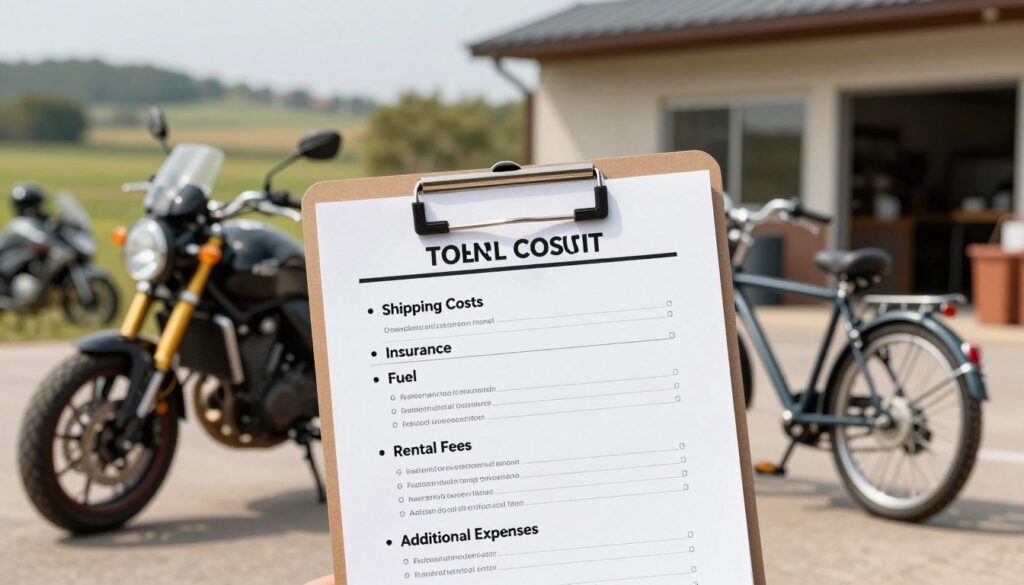
Define total cost as the quoted rate plus the common extras that surprise riders.
- Shipping totals: transport price, handling, crating or tie‑down, pickup/delivery surcharges, terminal storage, and freight insurance.
- Rental totals: base rate, taxes and fees, insurance upgrades, deposits, mileage limits, gear add‑ons, and one‑way drop charges.
- Service items that matter: pickup windows, port hours, and paperwork that can create storage days and extra bills.
Non‑monetary costs and the learning curve
Time off work, added hotel nights while you wait, and the stress of uncertainty all change your effective budget.
When you rent, plan for a learning cost: different ergonomics, luggage fit, throttle feel, and controls can slow your first riding days.
- Checklist to reuse: What do I pay up front? What can change later? What do I lose if plans shift?
Shipping vs renting motorcycle for travel: the real-world cost drivers
Cost drivers change quickly once you add days, distance, and the type of transport you pick. Make decisions by weighing daily rates against one-time transport fees and the risk of limited rental inventory at your destination.
Trip length break-even point: short vacations vs. longer adventures
If you have a long weekend, rentals usually win. Daily or weekly rates stay low and you avoid logistics. Over multi-week rides, daily charges compound and motorcycle shipping becomes cost-effective.
Distance, size, and transport type as the biggest price levers
- Control these: open vs. enclosed carriers, door-to-door pickup, and terminal choice.
- Longer distance and heavier bikes raise quotes; two riders headed to the same spot can see different totals.
- Port-to-port routes (like Alaska) can cut costs versus full door service.
Destination availability and terrain needs
Remote destinations often have few rental options, higher rates, or wrong bike types. That scarcity can push you to ship bike inventory instead.
If your route crosses a border, rental rules may limit where you ride. Also, rough terrain or custom setups make your familiar motorcycle more valuable—better suspension, seat, and luggage can justify the ship fee.
Next: side-by-side cost breakdowns let you plug in your own numbers and find the real break-even for your trip and country choices.
Cost breakdown when you choose motorcycle shipping
Knowing the real line items and timelines turns a quote into a plan you can trust.
An Alaska example helps make this concrete: expect roughly $700–$1,200+ plus port and handling fees. That range means you must plan around transit windows, not just a price tag.
Common price range example: Alaska and what it implies
Door-to-door service buys convenience and often costs more. Port-to-port (Seattle/Tacoma to Anchorage, Whittier, or Seward) lowers the base rate but adds your time to move the bike at terminals.
Methods that affect your budget
- Open trailers cost less than enclosed carriers.
- Terminal pickup avoids home pickup premiums but needs your transport plan.
- Marketplace bids can drop price but require more coordination.
What to compare beyond the headline
Ask each company about included handling, tie-down or crating rules, terminal fees, delivery window, and claims process. Transit is often 1–3 weeks; pickup windows may be 1–2 days.
Port handling, surprise fees, and essential insurance
Watch for after-hours pickups, missed windows, and daily storage charges. Confirm insurance limits, deductibles, and exact damage definitions—insurance is non-optional during loading and transit.
Paperwork and prep
Bring ID, registration, proof of ownership, and any notarized authorization. Prep the bike: ~1/4 tank fuel, secure loose items, check fluids and tires, and follow battery rules to avoid failed drop-off.
Cost breakdown when you choose to rent locally
Daily rates hide how quickly costs climb when a trip stretches beyond a few days. A cheap day price can become costly once insurance upgrades, deposits, and extras stack up.
Daily and weekly pricing behavior
Weeklies lower the per‑day sticker, but long trips multiply fees. Expect to add insurance, mileage overage, and possible one‑way drop charges as days increase.
What’s usually included
Maintenance coverage, roadside assistance, and local support are often part of the package. That support can save hours if a bike breaks down or needs a quick repair.
Extras that raise your rental total
- Paid luggage systems, GPS, heated gear, and helmets.
- Higher damage waivers and additional rider fees.
- Fuel policies and replacement bike guarantees.
Rules that affect your route and costs
Mileage caps, unpaved road bans, and cross‑border limits from some companies can force reroutes or steep overage bills.
Questions to ask before you book: insurance details, roadside scope, replacement policy, fuel rules, cancellation terms, and permitted roads. Renting often wins when you need quick pickup and simple logistics, but totals can rise fast as your itinerary grows.
Time and logistics comparison: shipping timelines vs. ready-to-ride rentals
Time matters: how long your bike is in transit changes everything about your schedule and costs. Match calendars and expectations before you commit so your trip starts when you do, not when the carrier does.
Typical shipping transit time and how to build it into your plans
Transit often runs between one and three weeks. That means you should book flights and lodging with buffer days at both ends. Treat the transit window as part of your itinerary, not an afterthought.
Pickup and delivery reality: windows, port hours, and storage fees
You usually get a pickup or delivery window, not an exact hour. Port and terminal hours can be limited; missed windows may trigger daily storage fees. Ask about pickup windows and confirm local terminal rules early in the process.
Spontaneity vs. planning: which option fits your schedule
Rentals let you land and ride the same day, making them the better choice for last-minute trips or tight schedules. Shipping and door-to-door service reduce local logistics but raise the price. Port-to-port saves money but adds local coordination and a short local transport way to your destination.
- Plan tip: add two buffer days when you ship; reserve a small contingency budget when you rent.
- Decision rule: choose the option that matches your tolerance for planning effort vs. paying for convenience.
Paperwork, insurance, and border rules that can make or break your choice
Missing the right documents is the most common reason plans stall at a terminal or border. Before you book, confirm the full document set and any cross‑border limits that apply to your route.
Documents commonly required to ship a bike
- Registration, proof of ownership, and government ID — carriers will ask for all three.
- Export/import permits or customs forms if you cross country lines.
- A notarized letter of authorization when the bike isn’t in your name.
Ownership and authorization issues
If the title shows a different name, expect extra hurdles. Carriers and terminals often refuse release without notarized permission.
Multi-country trips and rental limits
Many rental companies restrict crossings between countries. Always confirm allowed routes in writing before you plan days on the road.
Why buying locally can create registration headaches
- As a non‑resident you may not be able to buy motorcycle paperwork in your name in some countries (examples include India and South Africa).
- That can block border entry or force you to carry stamped shop papers indefinitely.
Decision tip: when borders matter, reliable paperwork and clear insurance coverage can outweigh a low sticker price. Treat compliance risk as part of your total cost — lost days or denied entry are real expenses and a key question in whether ship or rent is the better process.
Which option fits your trip: scenarios for U.S. riders
Pick the path that protects your riding hours and keeps unexpected fees out of the plan.
One destination, limited time
If you have a short, fixed schedule and want to hit the road immediately, a local rental is usually smarter.
It removes transit wait windows and helps you maximize ride time on a single destination. Confirm insurance and mileage rules before you book.
Longer tours
On multi‑week trips, cumulative daily charges can eclipse a one‑time shipping bill.
Shipping keeps your setup and luggage intact, so your ergonomics and gear perform the way you expect.
Alaska‑style planning
Port‑to‑port pickup (Seattle/Tacoma to Anchorage/Whittier/Seward) often saves cost compared to door‑to‑door service.
That choice trades local legwork for lower fees. Expect transit windows of one to three weeks when you ship.
Try a new bike or bring your build
If you want to test a different style, rent motorcycle and experiment risk‑free.
If your seat, suspension, or luggage are critical, ship bike to preserve comfort and reduce setup time.
- Decision shortcut: short + fixed schedule → rent; long + specific bike needs → ship.
- Price both options with the checklist from earlier sections and layer in your time tolerance.
Conclusion
Make your final call by weighing real costs, time, and the riding experience you want. Compare the all‑in shipping estimate (transport, handling, insurance, storage risk) with the full rental picture (rate, fees, limits, and local rules). Keep this comparison practical and numeric.
Generally, short, tight trips favor a ready‑ride option; longer outings or trips where your own setup matters often justify shipping the bike. Ask each company about windows, paperwork, and coverage before you book.
Action plan: gather 2–3 shipping quotes and 2–3 rental quotes for the same dates, run the break‑even math, then pick the service that matches your schedule and destination needs.