You depend on clear vision and healthy skin every time you hit the road. This brief intro gives a quick preview of why sun care matters even when typical gear feels enough.
UV overexposure during a ride builds up over years and can lead to early aging and pre-cancer conditions. Long-term damage is the real safety concern, not just a single burn.
Common high-exposure zones include the face and neck, which take the worst hits. This guide will show how to protect your eyes, pick durable sunscreen, and add reliable coverage into what you wear.
What you get next: practical steps to pair smarter sunscreen habits with smarter gear choices so you reduce accumulated damage on every ride.
Understand Your Sun Exposure Risk on the Road
Long-term exposure on open roads quietly ages skin and strains your eyes, even when you don’t notice a burn. UV damage builds up over years — not just from long trips but from many short rides that add small doses of harmful rays.

High-risk zones include your face, neck, hands, and any skin left visible by helmet openings, collar gaps, or short gloves. Check around your hairline, under the jaw, and the back of the neck before you leave.
- Assess exposed areas created by gear and clothing.
- Plan ride time: aim for early morning or late afternoon to avoid peak midday rays.
- Check the UV Index and local weather to decide route, stops, and how long you’ll be on the road.
Create a simple habit loop: assess risk, cover exposed skin, and reassess during the day. This daily routine reduces cumulative harm and keeps your skin and eyes healthier over years of riding.
Choose Sunscreen That Works for Motorcycle Riding
Choose a sunscreen that fits long rides and gear so you actually use it every time. Aim for a realistic SPF range—commonly 30–50—so you don’t rely on ultra-high labels that can create false confidence and skip reapplication.
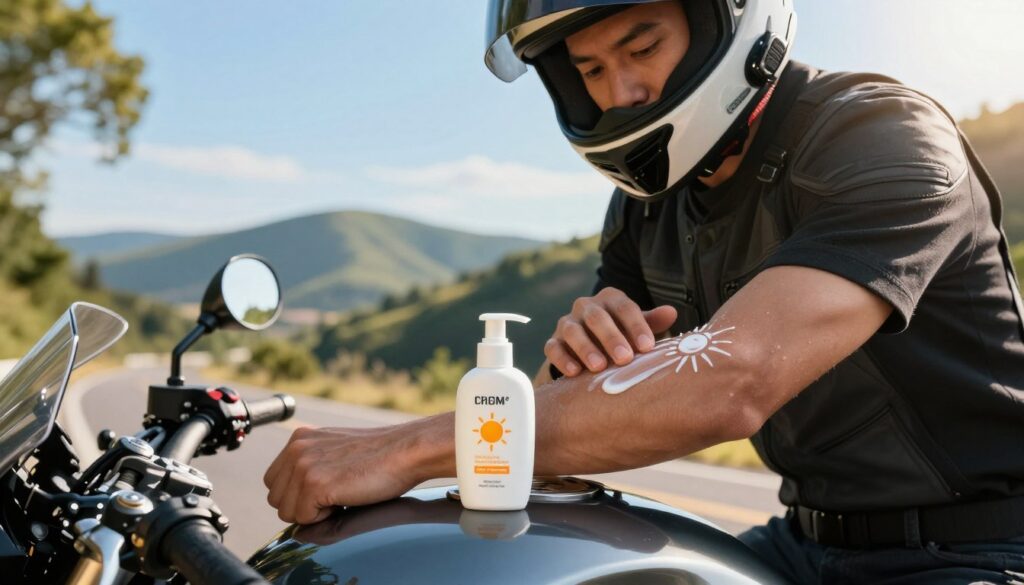
Watch ingredients: EWG data flags about 80% of reviewed products for concerns. Many riders avoid oxybenzone (possible hormone disruption) and retinyl palmitate (linked to potential skin harm) when choosing products.
- Prefer cream or lotion formats over sprays to get full, even coverage and avoid inhalation risks.
- Pick sport formulas and SPF lip products when you expect sweat and constant sun exposure.
- Choose textures that work with gloves, cuffs, and helmet padding so you apply correctly and often.
Use trusted third‑party ratings (EWG, dermatologist recommendations) to compare brands like La Roche-Posay, Nine Naturals, and Yes to Cucumbers. The best sunscreen is the product you will use consistently under gear to reduce long-term skin damage and eye strain.
Apply and Reapply Sunscreen So It Actually Protects You
Start your ride with sunscreen already on so you avoid the usual rush at the last minute. Apply about 20 minutes before sun exposure to let the formula absorb and form an active layer on your skin.
Use a generous amount—think a golf ball-sized dollop—to cover every exposed area, especially your face and neck. Deliberately coat edges where helmet openings, collars, and cuffs meet skin; those margins are easy to miss.
Make reapplication part of the ride
Reapply every two hours on long days, or sooner if you sweat heavily or if straps and padding rub the lotion away. Keep a travel tube in a tank bag or jacket pocket and set reminders at fuel stops.
- Replace expired products; expired sunscreen loses effectiveness over years.
- Favor creams over sprays when you need reliable, even coverage.
- Treat application as routine care—consistency reduces cumulative damage.
Build Sun Protection for Motorcycle Riders Into Your Gear and Eye Protection
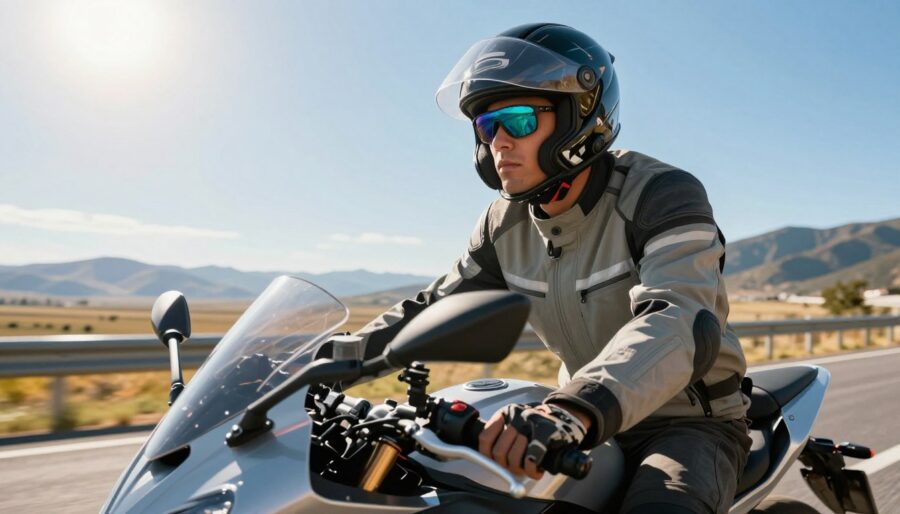
Your kit should do double duty: guard skin and eyes while keeping you cool in hot weather. Start with well‑fitting sunglasses that block UV; they lower long‑term eye damage risk, including cataracts.
Pick a helmet and visor setup that shades your face and cuts glare without trapping heat. Confirm the fit so gaps don’t reflect light up toward your eyes.
Choose clothing that shields skin—tightly woven or UV‑rated fabrics give solid coverage during summer rides. Add neck gaiters, gloves, and arm covers to close small exposed areas.
- Stay cool: use ventilated jackets, perforated leather panels, mesh pants, and moisture‑wicking base layers (avoid cotton).
- Carry: cooling vests and ventilated boots that still meet impact safety standards.
- Protect the bike: UV degrades leather, rubber, and plastic—treat seats and grips and park in shade when you can.
When your hot‑weather setup is wrong, you risk dehydration, heat exhaustion, and reduced focus on the road. Treat UV care as part of your gear checklist alongside abrasion resistance and visibility.
Conclusion
A simple daily routine can cut cumulative harm and keep your vision and skin healthier. Build an action plan that pairs SPF 30–50 choices with practical gear and sensible timing so years of rides add less damage.
Key rules: apply sunscreen about 20 minutes before exposure, use enough product to cover the width of exposed skin, and reapply roughly every two hours. Skip sprays when you can, check the UV Index, and replace expired products to keep effectiveness high.
Use UV‑blocking sunglasses, a good visor setup, and breathable gear to manage heat in hot weather. These habits make safer riding a habit, not a one-time fix — a short checklist that protects over years.